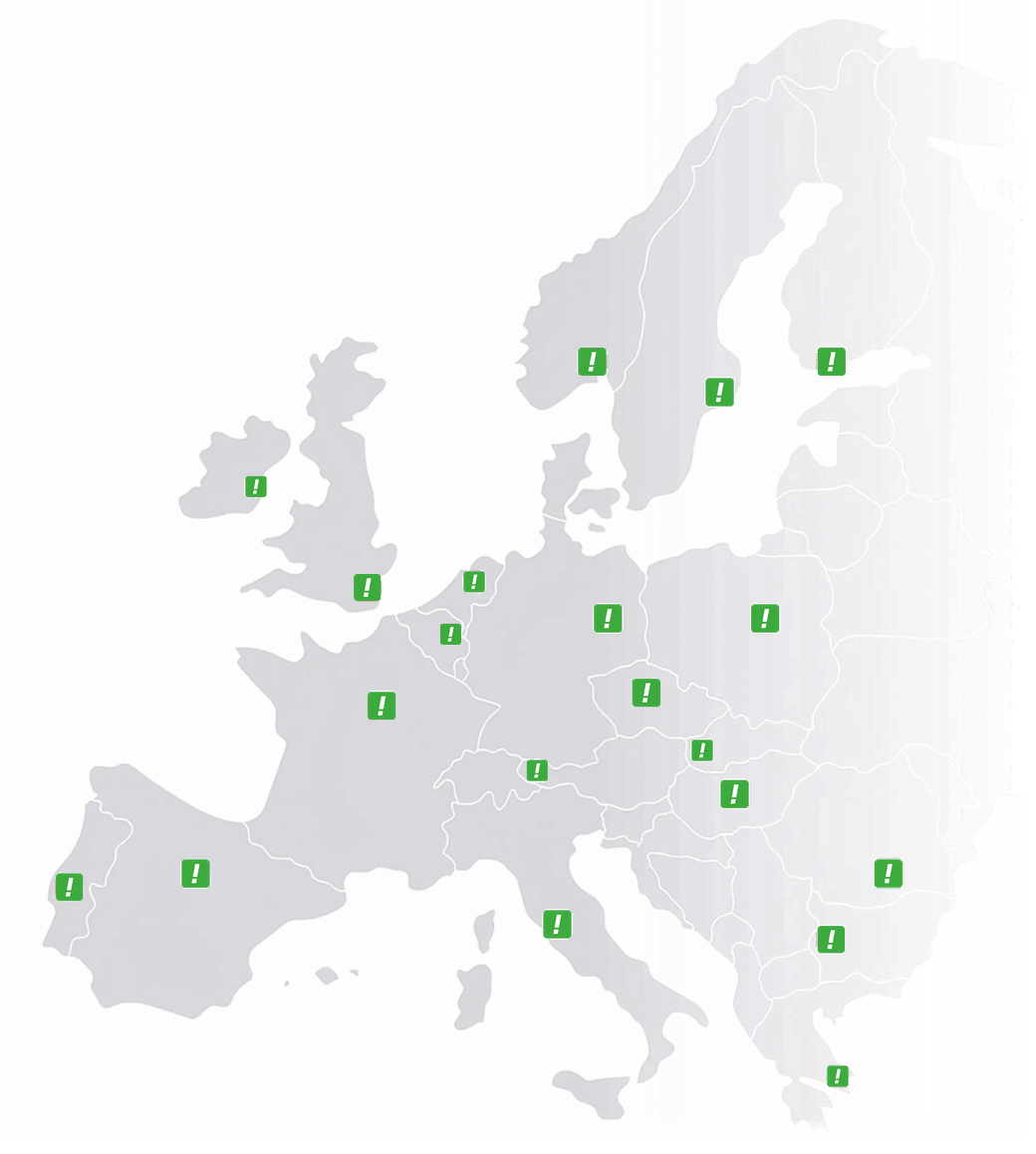

 Austria
 Belgium
 France
 Germany
 Italy
Italy Netherlands
 Poland
 Spain
Spain Sweden
 United States
IVR is one of those telephony terms that turns up in every call-handling brochure without anyone stopping to define it. It stands for Interactive Voice Response, and it describes the automated layer that answers an inbound call before a person does. The caller hears a greeting and a set of options, makes a choice with the keypad or their voice, and the system routes the call to the right team, queue or mailbox. The interaction is the whole point of the name, because the caller responds to a voice prompt and the system acts on the response.
For a business the practical question is not what the acronym expands to but what the system does for the calls customers make. An IVR decides who picks up, how quickly, and whether the caller reaches the right place on the first try. Get it right and a small team answers a high volume of enquiries without anyone ringing the wrong extension. This article explains how an IVR handles a call, what businesses use it for, and where it still fits next to newer options such as a conversational voicebot.
What IVR actually means
Interactive Voice Response is, at its core, a routing tool with a voice interface. The caller hears a fixed list of options that the business designed in advance, such as “press one for sales, two for support, three for accounts”. The system records the choice and connects the call to the destination mapped to that option. Everything the IVR can do is set out in the call flow ahead of time, so the intelligence sits in how that flow is structured rather than in the moment of the call itself.
That design has been the backbone of business telephony since the 1990s, and it endures because it solves a narrow problem reliably. Our complete guide to Interactive Voice Response covers the routing patterns, menu design and provider differences in depth. When a caller already knows which department they want, a single keypad press gets them there faster than any conversation could. The limitation is the flip side of the strength: an IVR only handles the intents its designer anticipated, and anything outside the menu has to escalate to a person.
How an IVR system handles an inbound call
The sequence is the same on every call. The number rings, the platform answers, and a recorded or synthesised greeting plays. The caller is offered a menu, presses a digit or speaks a keyword, and the system matches that input to a branch of the flow. The branch might ring a single phone, dial a queue of agents, send the caller to voicemail, play opening hours, or hand off to another menu one level deeper.
Behind that simple experience sits the routing engine, and this is where the quality of the underlying network starts to matter. The call has to connect cleanly, hold its audio without dropouts, and reach the destination without delay. A flow that looks tidy on paper still frustrates callers if the connection is laggy or the line breaks up, which is why the carrier path beneath the IVR matters as much as the menu on top of it.
What a business uses an IVR for
The most common use is straightforward routing. A company with distinct sales, support and billing teams puts each behind a menu option, so callers reach the right desk without a receptionist triaging every call by hand. That alone removes a large share of misdirected calls and the transfers they cause.
Beyond routing, an IVR carries the steady jobs that would otherwise eat a person’s day. It can play opening hours and an address out of hours, hold callers in a queue with position announcements during a rush, capture a voicemail when nobody is free, and present a after-hours path so a 7pm caller is not met with silence. It also enforces consistency, because the greeting and the options sound the same on every call regardless of who is in the office that day. Many businesses pair it with a welcome message and call recording so the first impression and the record of the call are both handled automatically.
IVR, voicebot or a hybrid: where IVR still fits
A fair amount of recent coverage frames the voicebot as the replacement for the IVR, but the honest answer is that each wins different flows. An IVR is the cleaner fit when the reasons people call are few and well known, when a regulator fixes the script, or when call volume is low enough that a conversational layer adds cost without adding value. A voicebot earns its place when callers ring for many different reasons, when a third or more of calls are routine questions, or when after-hours cover matters.
In practice most businesses land on a mix rather than a single choice, and the two run together well. A common pattern keeps the IVR for routing and drops a voicebot inside one busy queue, while another runs the voicebot as the front line with the menu as a fallback. The trade-offs are set out in detail in our comparison of voicebot versus traditional IVR.
What separates a reliable IVR from a cheap one
The menu is the easy part, and almost every provider offers one. The difference shows up in what happens once a call is connected. CallFactory routes calls over premium fixed-network paths rather than the cheapest internet route available, so the audio holds up and the connection stays stable through the whole call. That single decision is the difference between a flow that reads well in a demo and one that performs under real traffic on a Monday morning.
The second difference is who actually carries the call. CallFactory is a licensed operator in fourteen European countries, running on its own intelligent IVR platform, which keeps routing and support under one roof. With experience of operating business telephony since 2001, the network behind the IVR is built to keep inbound calls connecting day after day, which is the part a business actually relies on.
Setting up an IVR for your business
Getting started is a short conversation rather than a configuration project. We map the calls you receive, agree which option should do what, and build the flow for you, whether that is a simple two-option menu or a multi-level setup with queues, calendars and a connection into your own software. The full set of building blocks lives in the IVR toolkit, and where compliance requires it we deploy dedicated IVR servers on your own infrastructure.
The result is an inbound line that answers every call the same way, sends each caller to the right place, and holds up under load. Customers reach your business on a number that feels local to them, the routing happens automatically, and your team spends its time on the calls that genuinely need a person rather than on the ones a menu could have handled.