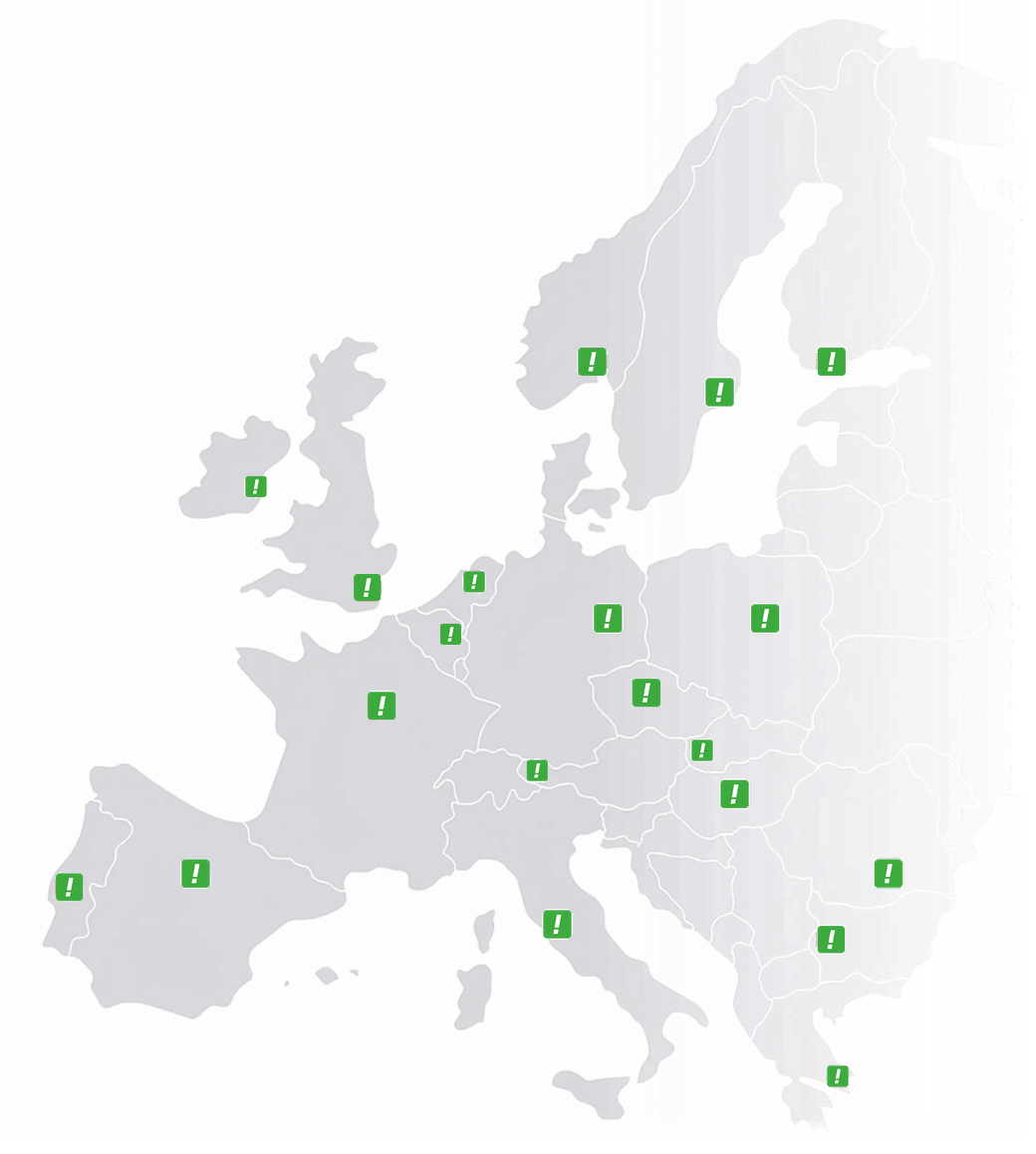

 Austria
 Belgium
 France
 Germany
 Italy
Italy Netherlands
 Poland
 Spain
Spain Sweden
 United States
IVR menus and voicebots get compared as if they were two versions of the same product. That framing is the source of most of the confusion in the UK market, because the two are designed for different jobs and replace each other only at the boundary where their jobs overlap. An IVR routes a caller through a fixed tree of choices using DTMF tones, while a voicebot listens for intent and responds in natural speech. The right answer for a given business depends less on which technology is newer and more on what the inbound call actually needs to accomplish.
This article walks through where each one earns its place. It covers the call flows where a press-button IVR is still the cleanest fit, the call flows where a voicebot consistently outperforms an IVR, and the hybrid configurations that work better than either one alone. The goal is to leave you with a clearer view of which calls you want the AI to take, which calls you want the menu to take, and how to phase a transition without leaving your team or your callers behind.
What the two technologies actually do
A traditional Interactive Voice Response system is a routing tool. The caller hears a fixed list of options, presses a number, the system records the choice and routes the call to the matching queue, mailbox or external destination. The intelligence sits in the tree structure, which is designed in advance by the operator. If the caller wants something that the tree designer did not anticipate, the IVR has no answer except to escalate to a human or hang up. UK customer service teams have used variants of this design since the 1990s, and the call-handling vendors have spent thirty years optimising it.
A modern voicebot is a conversational tool. The caller speaks naturally, a speech model understands what they said, a language model decides how to respond, and a synthesiser speaks the answer back. The intelligence sits in the model, which means the bot can handle inputs that nobody anticipated when the call flow was designed. The bot can also answer questions instead of merely routing them, which means a successful call may never need a human at all. The architecture options for building one are covered in detail in our piece on stitching versus realtime voicebots.
The two technologies overlap where the caller’s intent is “I want to speak to a specific team”. They diverge everywhere else, which is why “voicebot replaces IVR” is true for some flows and misleading for others.
When a traditional IVR still wins
There are still flows where pressing a digit beats holding a conversation, and pretending otherwise leads to overengineered call handling that frustrates callers and costs more to run.
The first case is simple binary or three-way routing where the caller already knows which team they want. A B2B engineering firm with three departments — sales, support, billing — can route the entire inbound book on a single-level IVR menu that takes one digit and routes the call. Adding a conversational layer to that flow makes the interaction longer rather than shorter, because the caller has to explain what they want instead of pressing the digit they were going to press anyway. Repeat callers who already know the menu particularly benefit from the IVR because the choice is muscle memory at that point.
The second case is regulated environments where the script is fixed by compliance. Some financial-services and regulated-utilities flows require a specific recorded script in a specific order, with no deviation. The Information Commissioner’s Office and the Financial Conduct Authority both publish guidance that calls into these flows. An IVR delivers that script exactly the same way every time, which is the entire point. A voicebot adapts what it says, which is its strength in most settings but a compliance problem in regulated ones.
The third case is legacy telephony integration. Older Automatic Call Distribution systems, on-premise PBXes and contact centre platforms that predate VoIP expect DTMF input on a specific port. They cannot accept a voicebot’s structured output without an additional adapter layer, which adds cost and another point of failure. If the rest of the stack is staying on legacy infrastructure for the next eighteen months, the IVR remains the cheaper option even where the voicebot would deliver a better experience.
The fourth case is very low call volume. A small consultancy that receives ten calls a week from existing clients does not need a voicebot. A simple IVR menu with two options and a fallback to mobile costs almost nothing to run and gets the routing job done. The voicebot’s per-minute compute cost is small in absolute terms but disproportionate at very low volume.
When a voicebot consistently outperforms an IVR
The flows where a voicebot earns its place are flows where the IVR is being asked to do something it was never designed to do.
The most common case is varied intent. UK SMEs in trades, healthcare, professional services and retail typically receive calls about appointments, quotes, billing, complaints, opening hours, product availability, returns, technical questions and a dozen other reasons. Forcing all of that through a press-button menu produces either a shallow menu that misses most intents or a deep menu that drives caller abandonment. A voicebot handles every intent in the same turn, because it understands what the caller said rather than which digit they pressed.
The second case is after-hours and overflow coverage. A voicebot that picks up the call at 7pm and books an appointment, takes an order or answers an FAQ keeps the customer relationship alive overnight. An IVR after hours can only route to voicemail or refuse the call, both of which lose business that the voicebot would have kept. This is the single largest practical reason UK SMEs add a voicebot in front of an existing IVR.
The third case is multilingual customer bases. London, Birmingham, Glasgow, Edinburgh and Manchester all carry inbound call traffic in multiple languages. A traditional IVR needs a language menu at the front, which adds friction for every caller. A voicebot detects the language the caller uses and replies in the same one without configuration. The single-model realtime architecture in particular handles language switching mid-conversation, which a chained system cannot.
The fourth case is answering questions, not just routing them. The IVR sends a caller asking “what are your opening hours” to the same queue as a caller asking to renegotiate a contract, because the IVR has no way to tell them apart. The voicebot answers the first one in five seconds and routes the second one to a person within the same call, which means the team’s time goes to the calls that need a human and the routine questions never enter the queue.
The fifth case is appointment booking and information lookup. Both of these involve a back-and-forth that a tree-based IVR cannot manage. A voicebot integrated with a calendar or a CRM books, reschedules or looks up an order in a few exchanges. Adding the same capability to an IVR requires a separate web flow or callback, which adds steps before the caller gets an answer.
Hybrid configurations that beat either one alone
For most UK businesses the question is not “voicebot or IVR” but “what mix of the two fits our calls”. Three hybrid patterns work consistently in production.
The voicebot-first with IVR fallback pattern uses the voicebot as the front line and offers a traditional menu as a backup. The opening line tells the caller they can describe what they need or press a digit for the team they want. Repeat callers who know the menu press the digit. New callers and varied intents go through the conversation. The two paths route into the same downstream system, so the team sees no difference once the call is connected.
The IVR-first with voicebot extension pattern keeps the existing IVR menu for routing and adds the voicebot inside one or more of the queues. A “press 4 for the appointment line” option, for example, lands the caller into a voicebot that books the slot, while “press 1 for sales” routes straight to a person. This is the lowest-risk way to introduce a voicebot, because the existing flow continues to work for callers who never opt into the new path.
The after-hours voicebot pattern lets the IVR handle every call during business hours and switches to a voicebot once the team is offline. The two systems share a number and a forwarding rule. This is the cheapest entry point to AI-assisted call handling, because the voicebot only pays for the calls the team could not have answered anyway.
The three patterns mix and match. A multi-site UK SME can run voicebot-first on the marketing number, IVR-first on the support line and after-hours voicebot on the head office number, all on the same CallFactory account.
How to decide which side of the line you sit on
Five questions filter most call flows into the right bucket:
- How varied are the reasons people call? Three or fewer recurring reasons usually means an IVR is enough. Eight or more usually means a voicebot earns its place.
- What proportion of calls are routine information requests? If a third or more of calls ask the same set of questions (opening hours, address, lead time, stock, status), a voicebot deflects most of that volume away from the team.
- Are calls coming in after hours? If after-hours calls represent more than ten per cent of the book, a voicebot keeps that revenue alive instead of dropping it into voicemail.
- Do callers arrive in more than one language? If yes, a voicebot removes the language menu and the friction it adds.
- Is the call flow under a regulator that fixes the script? If yes, the IVR or a tightly controlled voicebot under DPIA stays the safer option until the rule changes.
The answers cluster. A trades firm or a clinic typically answers yes on questions one through four and no on five, which puts them squarely in the voicebot camp. A retail bank current-account hotline typically answers yes on five, which keeps the IVR in place for those flows even if the rest of the bank’s contact estate moves to AI.
Getting started
CallFactory builds both voicebots and traditional IVR menus and runs them side by side where the call flow benefits from a hybrid. Implementation typically takes two to four weeks for a voicebot, faster for an IVR, and we deliver both as fully managed projects or as dedicated IVR servers on your own infrastructure when compliance requires it.
The first call back is a thirty-minute conversation about which calls you want the AI to take, which calls you want the menu to take and where the line should sit. From there we map the existing flow, propose the smallest change that delivers the largest improvement and put a timeline against go-live. By the end of that call you have a clear picture of which side of the IVR-versus-voicebot question fits your call book, how the transition phases and what the first ninety days look like for your team and your callers.