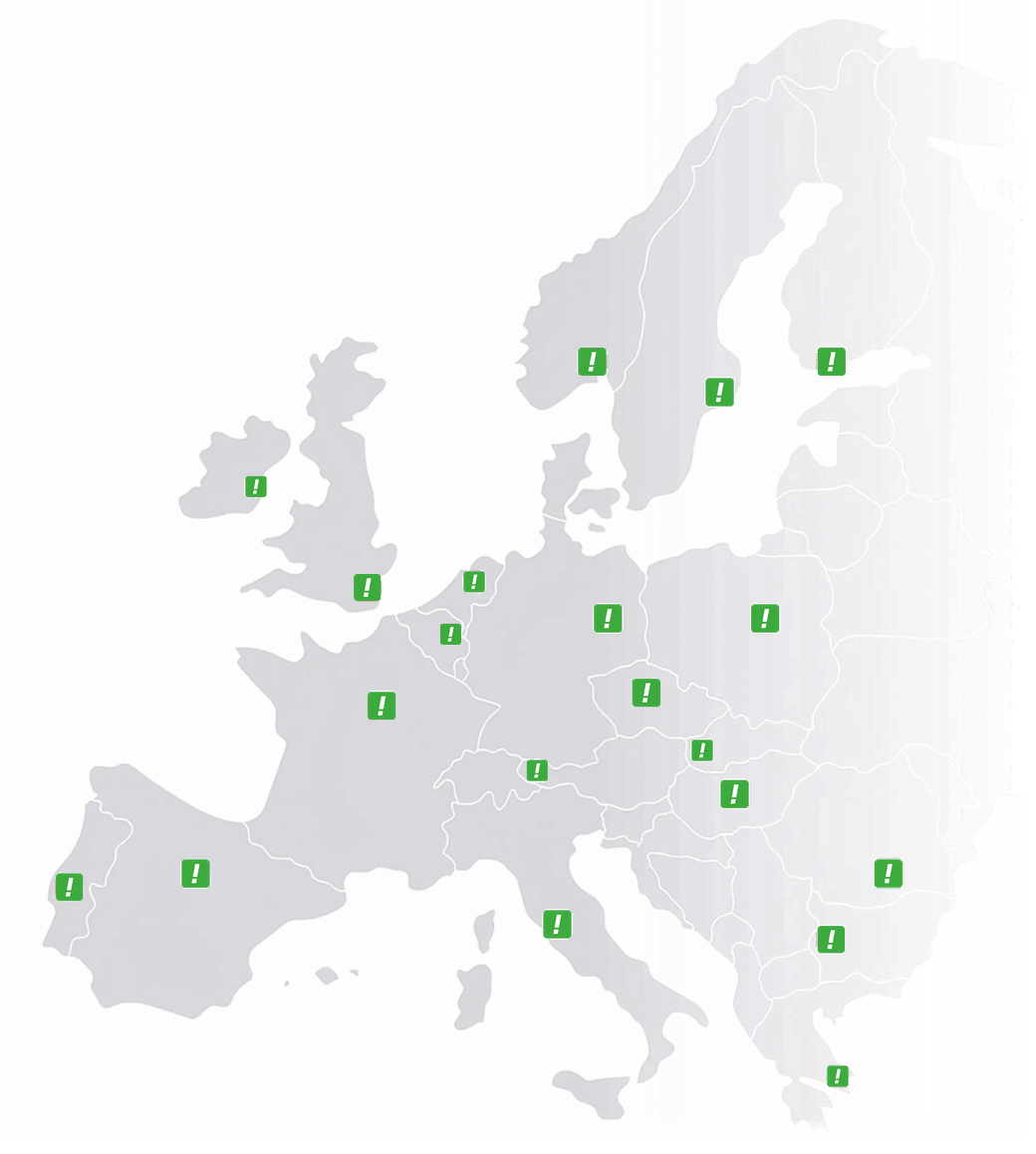

 Austria
 Belgium
 France
 Germany
 Italy
Italy Netherlands
 Poland
 Spain
Spain Sweden
 United States
Every unanswered ring is a prospect deciding whether to try your competitor next. Small and mid-sized businesses rarely have someone free to pick up every call, yet the caller on the other end expects the phone to be answered promptly and professionally, whoever happens to be in that day. A virtual receptionist closes that gap: a service that answers your inbound calls in your company name, handles the routine questions and puts the rest through to the right person, without a staffed front desk.
The term covers two models that work quite differently in practice. The traditional version is a human answering service, where trained operators pick up on your behalf. The newer version is an AI receptionist, a conversational voicebot that speaks with callers naturally, around the clock, at a fraction of the cost. This article explains what a virtual receptionist actually does, how the two models compare and how to connect one to the number your customers already dial.
What a virtual receptionist actually does
A virtual receptionist performs the same front-of-house role a person at reception would, applied to your inbound phone line. It answers within a few rings, greets the caller with your company name, and works out what the call is about. Routine matters such as opening hours, directions, order status or appointment requests are dealt with on the spot, while anything that needs a colleague is transferred to the right department or person.
Beyond answering, the service captures what would otherwise be lost. Each call ends with a structured outcome: a booked appointment, a message sent to the right inbox, or a qualified enquiry with the caller’s name, number and reason for calling. That record matters, because a scribbled note from a busy colleague tends to go missing, whereas a logged call with a transcript can be followed up the same day.
Human answering service or AI receptionist: the two models
The classic answering service routes your calls to an office of trained operators who answer in your name, follow a short script and email you the messages. It works well for low call volumes, and callers speak to a real person. The drawbacks are structural: operators handle many clients at once, coverage outside office hours costs extra, and every answered minute is billed, which makes busy months expensive.
An AI receptionist automates the same role with conversational software. It answers instantly, speaks fluent English, never puts a caller in a holding pattern because of another client’s call spike, and works at 3 a.m. on a bank holiday for the same rate as on a Tuesday morning. Because the AI is trained on your business specifically, it answers your product questions rather than reading from a generic script. For a detailed look at what that model does day to day, see our article on the AI receptionist. Many businesses combine the two: staff answer during core hours, and the AI takes evenings, weekends and overflow.
What it costs compared with hiring reception staff
A full-time receptionist in the UK costs roughly £22,000 to £28,000 a year before National Insurance, pension and holiday cover, and still only covers around 37 hours of the 168 in a week. A human answering service typically runs from £50 to several hundred pounds a month depending on call volume, with per-call or per-minute charges on top.
An AI receptionist sits well below both: a fixed monthly service fee plus a per-call rate, with no recruitment, sick cover or overtime. Salary is just one side of the comparison, though. The larger financial effect is usually on the revenue side, since research consistently shows that most callers who reach voicemail hang up without leaving a message. Answering those calls turns marketing spend that was already paid for into enquiries that actually reach your team.
How it works with the number your customers already dial
A virtual receptionist does not replace your business number; it sits behind it. You forward your existing number to the service, or route it conditionally so the receptionist only picks up when your team is busy, after a set number of rings or outside opening hours. Callers notice nothing except that the phone is now always answered.
The routing on your side stays flexible. Calls can be passed to mobiles, desk phones or a call queue depending on who is available, and the rules can differ per day or per department. Because the service is number-agnostic, it works with local, national and freephone numbers alike, so the number on your website and vehicle livery keeps generating inbound enquiries while the answering layer behind it improves.
Call quality and compliance: what to check before you choose
Providers differ most where it is hardest to see: on the route your calls actually travel. Some carry calls over the cheapest available internet paths, which shows up as dropped syllables and half-second delays, precisely the artefacts that make an automated conversation frustrating. CallFactory routes every call over premium fixed-network telephony rather than the cheapest internet route, so the conversation between your caller and the receptionist stays clear enough for speech recognition to work reliably.
The second thing to check is who you are actually buying from. Many virtual receptionist brands resell another company’s platform, which means faults and data questions pass through an extra party. CallFactory is a licensed telecom provider in 15 countries and runs its own intelligent IVR platform, backed by business telephony experience since 2001. For UK businesses that also means a straight answer on data protection: call data is processed on infrastructure the operator controls, in line with UK GDPR.
Setting up a virtual receptionist step by step
Setup is shorter than most teams expect. First, you decide what the receptionist should handle: which questions it answers itself, which callers go straight through to a person and what details a message must capture. Starting from the three questions your business is asked most often on the phone gives the script an immediate, practical core.
Second, the greeting and routing rules are configured and you review a test call. Third, you forward your number and go live, typically within 48 hours for an AI receptionist. From that point the service runs continuously, and you refine it as you go: opening hours, new products and altered transfer rules can be changed without technical knowledge, so the receptionist keeps pace with the business instead of lagging behind it.