
 Austria
 Belgium
 France
 Germany
 Italy
 Netherlands
 Poland
 Spain
 Sweden
 United States

A UK phone number looks simple until you have to validate one in a web form, import a few thousand into a CRM or print one on a quote for a customer abroad. Almost every UK number has 11 digits when dialled inside the country, but the way those digits split between area code and local number varies from town to town, and the +44 version follows its own rule. Getting the format wrong is a common reason why customers, suppliers and new starters cannot be reached from a booking system or an SMS reminder.
This guide is written for two kinds of reader:
- You want to know how a UK phone number is built or how to write one correctly. The first five sections cover the digits, the area codes, the prefixes, the +44 format and safe example numbers, and you do not need any extra service for that.
- You are choosing which number your business should publish for customers, prospects and partners. Skip to which number format a business should publish, where we explain what each format tells a caller. You can compare the number types on our UK phone number page.
How a UK phone number is built
Every UK number dialled from inside the country starts with a 0, which is the trunk prefix that tells the network a national number follows. After that 0 come ten digits in nearly every case, so the full number has 11 digits. Ofcom calls those ten digits after the 0 the national significant number, and it is exactly that part that callers abroad dial after +44.
The first digit after the 0 tells you what kind of number it is. A 1 or a 2 means a geographic landline with an area code, a 3 means a national non-geographic number, a 7 usually means a mobile, an 8 means freephone or a special-rate number and a 9 means a premium-rate number. Because that first digit carries so much meaning, many callers decide whether to ring a business before they have read the rest of the number.
How many digits a UK phone number has
A landline number is made up of an area code and a local number, and the length of the area code decides how the 11 digits are split. Large cities have short area codes with long local numbers, while smaller towns have longer codes with shorter local numbers. The total stays the same, which is why the usual grouping changes from place to place.
| Area code type | Example | Grouping | Digits |
|---|---|---|---|
| 02x (London, Cardiff, Northern Ireland and others) | 020 7946 0123 | 3 + 4 + 4 | 11 |
| 011x and 01x1 (Leeds, Birmingham, Manchester and others) | 0161 496 0123 | 4 + 3 + 4 | 11 |
| 01xxx (most other towns) | 01632 960123 | 5 + 6 | 11 |
| 01xxxx (a few rural areas) | 016977 xxxxx | 6 + 5 | 11 |
A small number of rural areas use a five-digit local number behind a five-digit code, so those numbers have 10 digits in total. That exception is the reason why a strict “exactly 11 digits” rule in a web form occasionally rejects a genuine customer. If you validate UK numbers, accept 10 or 11 digits including the leading 0 and store the number in international format, as described below.
For the towns behind the most common codes, see our guides to the 020 area code and the 0161 area code.
What the first digits tell a caller
Callers in the UK read a number’s prefix as a hint about what the call will cost and who they are likely to reach, so the prefix matters as much as the digits that follow it.
- 01 and 02 are geographic landline numbers. They show a caller where a business is based and are charged as a standard call, usually inside a landline or mobile bundle.
- 03 numbers such as 0300, 0330 and 0333 are national numbers that are charged like 01 and 02 calls, so most callers pay nothing extra because the call falls within their inclusive minutes.
- 07 numbers are mostly mobiles, written as 07700 900123. Two ranges look similar but are not mobiles: 070 numbers are personal numbers with higher call charges, and most 076 numbers are pagers. Our guide to the UK mobile number format covers the 07 ranges in more detail.
- 0800 and 0808 are freephone numbers, which are free to call from UK landlines and mobiles.
- 084 and 087 numbers carry a service charge on top of the caller’s own access charge, and 09 numbers are premium rate.
How to write a UK number with +44
For a caller abroad, a UK number is written as +44 followed by the number without its leading 0. The plus sign stands for the international access code of the country the call starts from, which is 00 in most of Europe and 011 in the United States and Canada. Some examples, using Ofcom’s drama ranges:
- London landline 020 7946 0123 becomes +44 20 7946 0123
- Manchester landline 0161 496 0123 becomes +44 161 496 0123
- Freephone 0808 157 0123 becomes +44 808 157 0123
- Mobile 07700 900123 becomes +44 7700 900123
On a website or letterhead it is fine to keep the spaces, since they help people read the number aloud. In a CRM, a booking tool or an SMS platform, store the number in the E.164 standard, which is the plus sign, the country code and the digits with no spaces or brackets, as in +442079460123. Avoid the mixed notation +44 (0)20 7946 0123 in any field that a system dials or matches, because the (0) is easily read as a digit and breaks the number. Also keep phone numbers in a spreadsheet as text, because a column formatted as a number silently drops the leading 0.
UK phone number examples you can safely use
When you need a sample number for a form placeholder, a training manual, a screenshot or test records, use one of the ranges that Ofcom has set aside for drama and documentation. These numbers are never allocated to a real subscriber, so nobody is called by mistake when a test message goes out or a colleague dials the number on a slide.
- London: 020 7946 0000 to 020 7946 0999
- Manchester: 0161 496 0000 to 0161 496 0999
- Any other town: 01632 960000 to 01632 960999, a code that belongs to no real area
- Freephone: 0808 157 0000 to 0808 157 0999
- Mobile: 07700 900000 to 07700 900999
Ofcom publishes similar ranges for other large cities such as Leeds, Birmingham, Glasgow and Cardiff. Using these ranges is a simple way to keep real customer and staff numbers out of demo data.
Which number format a business should publish
The number on your website, in ads, on quotes and in email signatures is the first thing an enquiring customer sees, and its format answers two questions before they dial: where is this business, and what will the call cost me? A local 01 or 02 number tells callers in that city that you serve their area. A 0333 number gives a national presence at the price of a normal call, and an 0800 number removes the cost question entirely, which helps sales lines where every missed enquiry is lost business. A personal 07 mobile, by contrast, says little about the company and leaves with the employee who carries it.
None of these business numbers is tied to a desk or a SIM card. We deliver each incoming call where you want it, so it can ring on a mobile, on a landline at the office, with a home worker, at your branch abroad, in your own or an external call centre, or at our voicebot, which answers every caller straight away. A local number in Manchester or a 0333 number can therefore be answered by a team that sits anywhere, while the caller experiences an ordinary domestic call. With call forwarding you decide who answers and when, for example the on-call mobile after closing time.
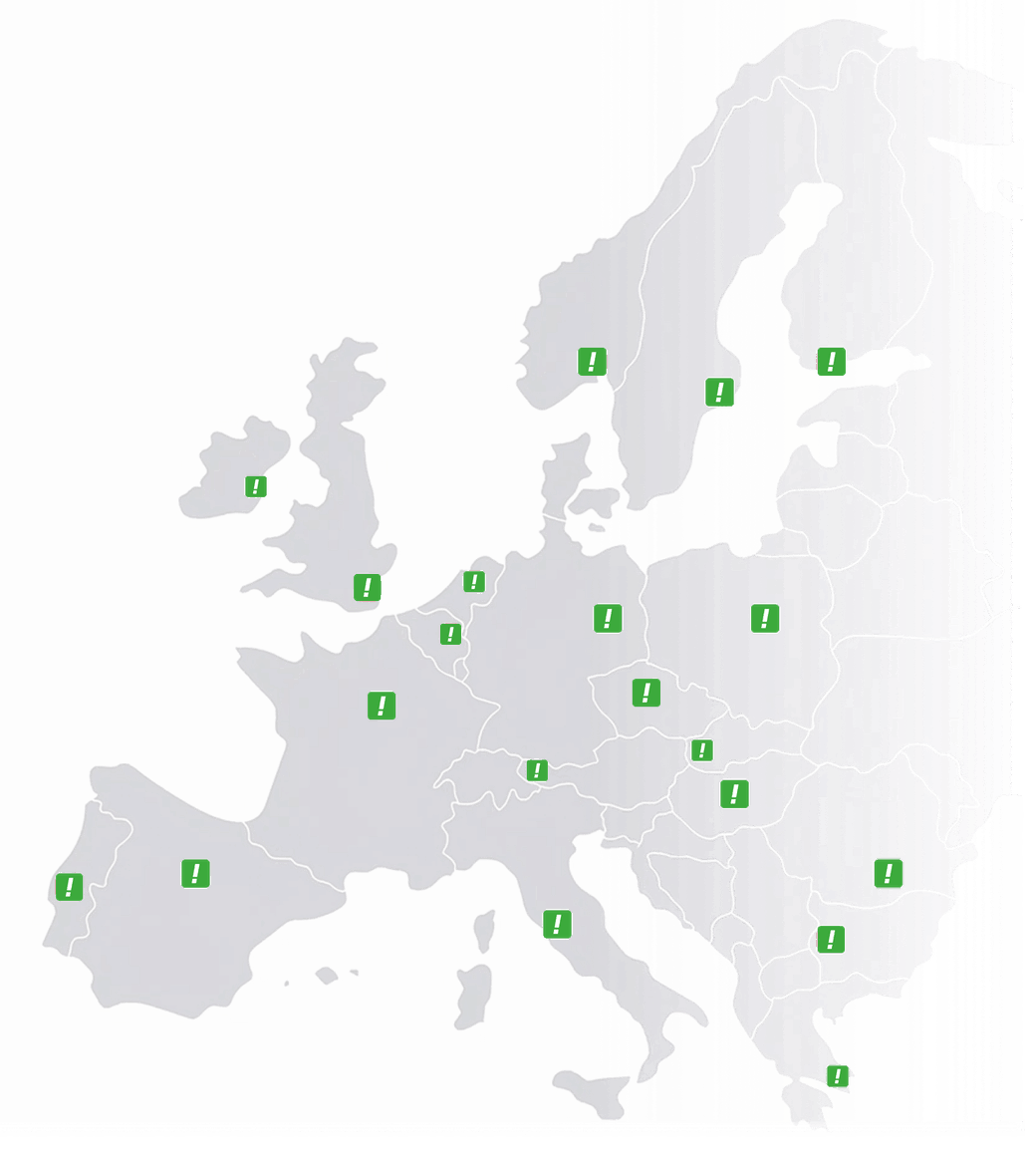
Two things set our numbers apart. Calls travel over premium fixed-network routes rather than the cheapest internet path, although you can still choose delivery over VoIP if you prefer. And CallFactory is a licensed telecom provider in 15 countries, 14 in Europe plus the United States, running its own intelligent IVR platform, so menus, routing and voicebots are handled by the team that runs it. We have been doing this since 2001. Because Ofcom lets every UK number type register on the customer’s own business address in any country, a company based outside the UK can publish a UK number in the same way.