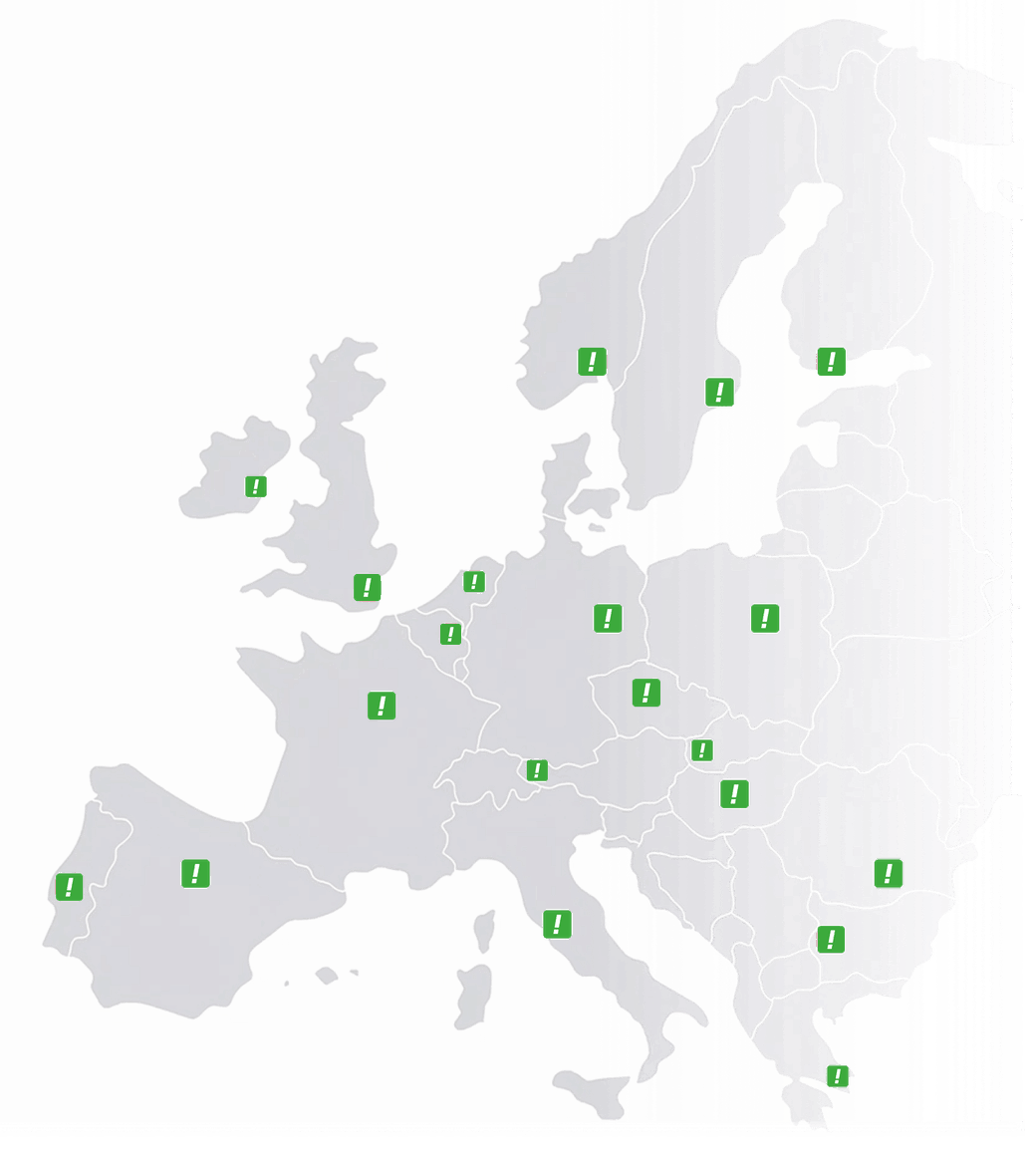
Austria
 Belgium
 France
 Germany
 Italy
 Netherlands
 Poland
 Spain
 Sweden
 United States

A UK mobile number is easy to recognise once you know the pattern: it starts with 07, it has 11 digits, and for callers abroad it is written as +44 7 followed by nine digits. Getting that format right matters more than it seems, because a mobile number typed with a stray 0 after +44, or stored without its leading 0 in a spreadsheet, is one of the most common reasons why customers, suppliers and new starters cannot be reached from a CRM, a booking form or an SMS reminder.
This guide is written for two kinds of reader:
- You want to know how a UK mobile number is built or how to write one correctly. The first three sections cover the 07 prefix, the digits, the +44 format and the ranges that look like mobiles but are not, and you do not need any extra service for that.
- You are deciding which number your business should publish for customers, prospects and partners. Skip to why a business publishes its own number, where we explain how a business number rings on the same mobiles while staying with the company. You can compare the number types on our UK phone number page.
What a UK mobile number looks like
Every UK mobile number written for callers inside the UK has 11 digits and begins with 07. The usual way to write it groups the first five digits and the last six, as in 07700 900123, because that matches the way people read the number out on the phone. Some companies write 07700 900 123 instead, which is equally valid, as long as the same style is used across the website, quotes and email signatures.
Unlike a landline number, a mobile number has no area code. Our guide to the UK phone number format explains how area codes divide up landline numbers. The digits after 07 tell you nothing about where the subscriber lives or works, and since mobile numbers can be ported from one network to another, they no longer tell you reliably which network the number is on either. That is why a 07 number on a website says little about the business behind it, a point we come back to below.
How to write a UK mobile number in international format
For callers outside the UK you drop the leading 0 and put the country code +44 in front, so 07700 900123 becomes +44 7700 900123. The plus sign stands for the international access code of the country the caller is in, which is 00 in most of Europe and 011 from the United States and Canada. A colleague in New York therefore dials 011 44 7700 900123, while a supplier in Amsterdam dials 00 44 7700 900123.
The format to avoid is +44 (0)7700 900123. It is meant as a hint that the 0 belongs to domestic dialling, yet callers abroad regularly dial the 0 as well, and many forms and phone systems reject or mangle the number. For a CRM, a web form or an SMS platform the safest choice is the E.164 format without spaces, +447700900123, which every modern system accepts and which keeps the leading 0 from disappearing when the data passes through a spreadsheet.
Which 07 numbers are mobiles and which are not
Not every number that starts with 07 belongs to a mobile phone. Ofcom, which manages UK numbering, allocates the ranges 071 to 075 and 077 to 079 to mobile networks, and these cover the mobile numbers your customers and staff carry. Numbers in the 076 range are used for pagers, with the exception of 07624, which is a mobile range for the Isle of Man.
The 070 range is easy to confuse with a mobile. It is used for personal numbering services that forward calls to another phone, and it has a history of misuse in scam calls, which is why many people hesitate to call or answer an unfamiliar 070 number. If a number on an invoice or in an email looks odd, our whois number lookup shows which type of number it is before anyone in your team calls it back.
For examples in brochures, training material or test data, Ofcom reserves 07700 900000 to 07700 900999. Numbers in that range never reach a real person, which makes them the right choice wherever a realistic mobile number has to appear on screen.
Why a business publishes its own number instead of a 07 mobile
Many small companies start with the owner’s own mobile on the website, the van and the quote template. That works until the business grows: the same 07 number then carries customer calls, supplier calls and private calls, nobody else can answer when the owner is with a client, and if the salesperson who used their own mobile leaves, the number that customers have saved leaves with them.
A business number solves that because it belongs to the company rather than to a handset. A local number such as 020 or 0161 tells callers there is a business in their region, a 0333 number gives one UK-wide number at normal call rates, and an 0800 number lets customers call for free. Each of those numbers tells the caller more than a 07 number does, and none of them depends on one person’s phone. Our guide to choosing a business phone number compares the types in more detail.
How calls to a business number ring on your team’s mobiles
Choosing a business number does not mean giving up the mobile. A UK business number is not tied to a SIM card or a copper line, so when a customer dials it the call enters our network and is delivered wherever you choose: the mobiles of the sales team, a desk phone at the office, a colleague working from home, an external call centre or our voicebot that answers every caller straight away.
You set that routing yourself in your account. With call forwarding the number rings on one mobile or on a group, at the same time or in turn, and you change the destination in seconds when someone is ill or out at a client. With fixed on mobile the business call arrives on the mobile as an ordinary incoming call without an app, so staff use the phone they already carry while their personal 07 number stays private.
When a 07 mobile is enough, and when a business number pays off
A personal mobile is often enough for a sole trader whose customers know them by name and who answers every call personally. As soon as more than one person should be able to answer, as soon as calls arrive outside the hours that one person works, or as soon as the number appears on vans, adverts and directory listings, a business number pays for itself, because it keeps every enquiry with the company.
CallFactory has provided business phone numbers since 2001, which gives us more than 25 years of experience with inbound calls for companies across Europe. We are a licensed telecom provider in 15 countries, and we run our own intelligent IVR platform, so our team can see and change your routing, menus and voicebot directly. Calls to your number travel over premium fixed-network routes rather than the cheapest internet path, which keeps the audio clear when a customer rings at a busy moment. Under Ofcom rules your UK number registers on your own business address in any country, a new number is active within one working day, and an existing business number can be ported to us in a few business days, so customers keep dialling the number they already know.