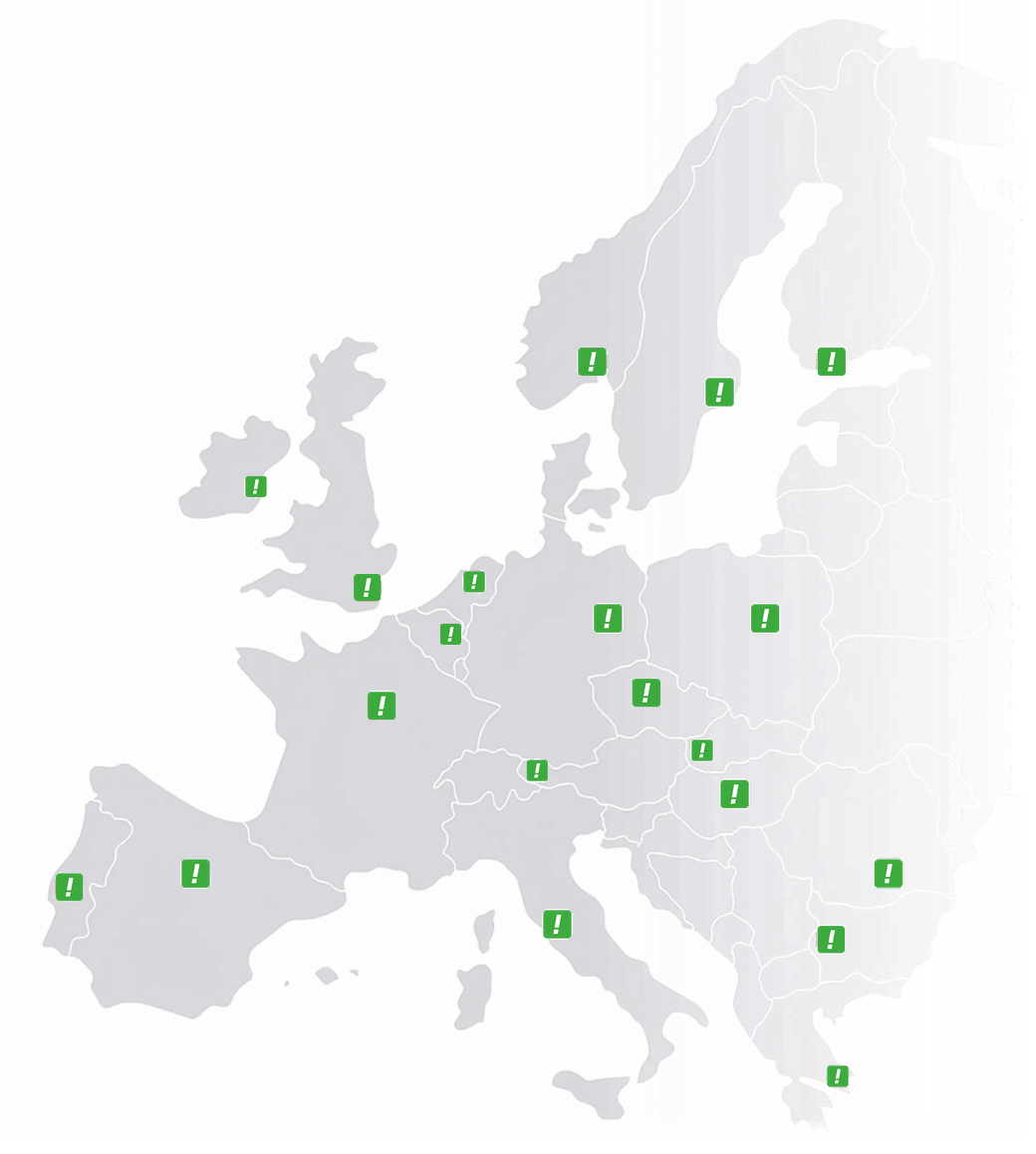

 Austria
 Belgium
 France
 Germany
 Italy
Italy Netherlands
 Poland
 Spain
Spain Sweden
 United States
Every business with a phone number eventually reaches the point where someone rings and nobody is free to answer. A tradesperson is up a ladder, a clinic’s front desk is dealing with the patient in front of them, a small agency is between meetings. However it happens, an unanswered call rarely gets a second attempt: the caller either leaves without a message or dials a competitor instead. A telephone answering service exists to close that gap, picking up the phone in your company name whenever your own team cannot.
The term covers more ground than most business owners expect, from a traditional human answering bureau to an always-on AI receptionist built on a voicebot platform. This article sets out the three models on the market, what each one typically costs, the signs a business has outgrown informal call cover such as a shared mobile or an answerphone, and what to verify before signing up with a provider.
What a telephone answering service actually does
At its core, the service answers calls to your existing business number on your behalf, using a greeting and script built around your company rather than a generic one. Routine questions, such as opening hours, appointment availability or where an order stands, are answered directly. Anything that needs your judgement is either transferred through to the right person or logged as a structured message, so nothing depends on whoever happens to be free at that moment.
The value shows up most clearly outside normal working hours. Evenings, weekends and the ten minutes either side of lunch are when a shared office phone tends to go unanswered, and those are exactly the moments a competitor’s number picks up instead. An answering service removes that gap without asking anyone to carry the phone home.
The three types of telephone answering service
The oldest model is a human answering bureau: a team of trained operators, working from a shared office, who answer on behalf of many client businesses at once and pass messages on by email or text. It suits businesses that specifically want a person on the line and can absorb the per-minute cost that comes with it.
The newest model is an AI receptionist, a conversational assistant that answers instantly, understands what the caller needs and either resolves it or routes the conversation, at any hour, for a flat monthly rate. Our virtual receptionist article compares the human and AI models in detail, and the AI receptionist article covers that specific product. Many businesses land on a mix: an in-house team handles core hours, and either model covers the rest.
How much a telephone answering service costs
A human answering bureau typically charges from around £50 a month for light usage, rising into the hundreds once call volume climbs, because every answered minute is billed against a client account. Coverage outside office hours usually carries a premium on top of the base rate.
An AI receptionist changes that calculation. Because the software scales without adding operators, pricing is usually a fixed monthly service fee plus a modest per-call rate, with 24-hour cover included rather than charged as an extra. Compared with employing a full-time receptionist, whose UK salary alone typically runs £22,000 to £28,000 before National Insurance and holiday cover, both answering-service models cost a fraction of the price for coverage that a single employee cannot physically provide across a full week.
The comparison that tends to persuade business owners is not the monthly invoice but the enquiries that would otherwise disappear. Research into caller behaviour consistently finds that most people who reach voicemail hang up rather than leave a message, which means a marketing budget that already paid to generate that call is wasted the moment it goes unanswered. Measured against that lost revenue rather than against doing nothing, the monthly cost of either answering-service model is usually recovered from a handful of enquiries that would otherwise have gone to a competitor.
Signs your business has outgrown ad hoc call cover
A shared mobile or a colleague picking up “when they can” works while call volumes are low. The signs it has stopped working are specific: calls going to voicemail during business hours, customers mentioning they called twice before getting through, or a team member’s actual job being interrupted several times a day to answer the general line. Seasonal spikes, a new marketing campaign, or opening a second location are common triggers that push call volume past what informal cover can absorb.
There is also a quieter version of the same problem, where calls do get answered but inconsistently, because whoever picks up gives a different answer to the same question depending on how busy they are. A dedicated answering service standardises that experience, since the script and the information behind it stay the same on every call, whether it is the first of the day or the fortieth.
What to check before choosing a provider
Two things separate a reliable telephone answering service from one that frustrates callers. The first is call quality: some providers route calls over whichever internet path is cheapest that day, which shows up as dropped words and awkward delays, particularly noticeable when an AI receptionist is trying to follow a conversation. CallFactory routes every call over premium fixed-network telephony rather than the cheapest available route, so the line stays clear enough for accurate answering, human or automated.
The second is who actually operates the service. Several well-known answering-service brands resell another company’s platform underneath their own name, which adds a party between your business and the infrastructure handling your calls. CallFactory is a licensed telecom provider in 15 countries, running its own intelligent IVR platform with business telephony experience since 2001 behind it, which matters if a fault ever needs tracing quickly. ## Getting started with a telephone answering service Setup does not require a new phone number. Your existing number is forwarded to the service, either permanently or only when your team does not pick up within a set number of rings, so the switch is invisible to customers. The greeting, opening hours and message-taking rules are configured up front, usually based on the handful of questions your business is actually asked most often on the phone, and a test call confirms everything works before it goes live.
From there, an AI receptionist is typically answering within 48 hours, and the rules stay editable as the business changes, whether that means updating opening hours for a bank holiday or adding a new service line to the script. The number on your website keeps generating enquiries; the difference is that every one of them now gets answered.