
 Austria
 Belgium
 France
 Germany
 Italy
Italy Netherlands
 Poland
 Spain
Spain Sweden
 United States
A UK business expanding into European markets quickly finds two easy answers to the phone-number question, and both have a catch. The first is the cheapest virtual-number plan available, which wins on monthly price and loses on the thing customers actually notice, namely call quality. The second is the largest all-in-one calling suite, usually built around US infrastructure, which is capable but treats European local numbers and the registration rules each country applies as a secondary concern. For an inbound line that customers, prospects and partners will call from inside their own country, neither default is automatically the right fit.
The better question is what “premium” really buys on a business phone line, because the word is used loosely. This guide breaks it down into three concrete differences a buyer can check, then offers a short way to judge any provider on those terms. The starting point for the service itself is the international telephony overview, which describes the local-number and cross-border routing this article compares.
What “premium” means on a business phone line
Premium is not a tier badge or a higher invoice; on a phone line it comes down to whether the call sounds and behaves like a domestic one for the person dialling. A prospect calling your Italian or German number does not know or care which network the call crosses, but they immediately notice a half-second delay, a clipped greeting or a call that drops mid-sentence, and they read those faults as a sign of an unserious supplier. The cost of cheap routing is paid at the first impression, which is exactly the moment an inbound enquiry is won or lost.
So the useful test of a premium provider is not the length of its feature list but how it handles the parts a customer experiences directly: the path a call travels, who is accountable when something needs changing, and whether the number and the automation around it come from one coherent system. Those three are the sections that follow.
Fixed-network routing versus the cheapest internet path
The clearest dividing line is how calls are carried. Budget providers route over the lowest-cost internet path they can find at the moment of the call, which keeps their margins healthy and works acceptably for low-stakes or internal calls. The trade-off appears under load and over distance, as jitter, latency and dropped connections, precisely on the cross-border calls a European expansion depends on.
A premium European provider carries calls over traditional fixed carrier networks instead, paying the local call charges and international rates to the relevant operators in each country so the connection holds up. The result is that a customer calling your local number hears the clarity of a domestic landline even when your team sits in another country. CallFactory routes on that fixed-network path by design rather than reaching for the cheapest available route, which is the single most audible difference between a premium line and a cheap one. ## A provider with its own platform versus one without The second difference is structural and decides how fast things get fixed. Many virtual-number brands have no platform of their own: they buy platform capacity from an upstream operator and present it under their own name. That is workable until you need something non-standard, such as a specific routing arrangement or an urgent change, at which point a provider without its own platform can only raise a ticket with the operator above it and wait, because it does not control the platform.
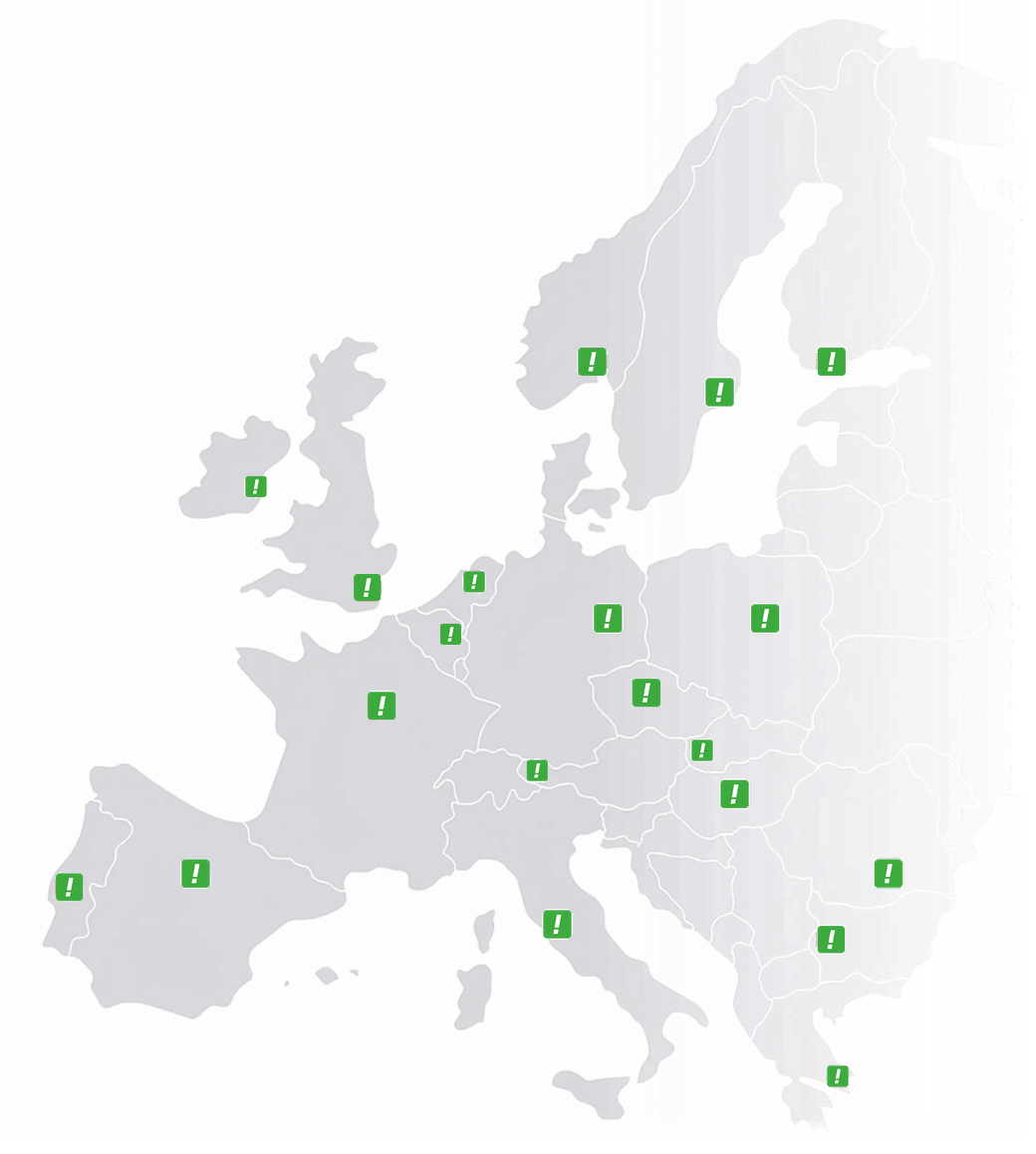
A telecom provider that runs its own intelligent IVR platform handles routing changes and fault resolution on that platform in-house. CallFactory is a registered telecom operator in 14 European countries and runs its own platform, so the same team that activates a number can also reconfigure or troubleshoot it directly. For a business that will be adjusting call flows as it grows in each market, that directness compounds into real time saved.
One platform for numbers, IVR and voicebot
The third difference is how much of your phone setup comes from a single coherent system. A common pattern is to buy numbers from one vendor and bolt on a separate provider for the IVR menu or an AI voicebot, which leaves you connecting two systems and coordinating two support desks whenever a call flow changes. It works, but every change touches a seam between vendors.
When the operator runs its own platform, the seam disappears. CallFactory supplies the local numbers and runs its own IVR and voicebot tools on the same platform, so a greeting, a menu, a queue or an AI voice agent is configured in the place the calls already arrive. The local numbers, the routing rules and any automation come from one provider, which is the architecture the most demanding inbound setups tend to converge on because it removes a class of integration problems entirely.
When cheap VoIP is genuinely the right call
None of this means premium is always the answer, and a fair comparison should say so. If a number is for occasional internal use, for a short-lived campaign, or for a market you are only testing with low call volumes, the cheapest plan can be perfectly sensible, because the quality and accountability gaps matter far less when the line is not your front door. Equally, a business already standardised on a large collaboration suite for internal calls may reasonably keep using it for that purpose.
The premium case becomes compelling specifically where the number is an inbound business line that customers, prospects and partners call from inside their own country, where quality is read as credibility, and where you expect to adjust routing as you grow across markets. That is the situation this guide is written for, and it is where the three differences above stop being abstract and start affecting how many enquiries actually reach your team.
How to judge a provider in practice
A buyer can settle most of this with a few direct questions. Ask whether the provider runs its own platform or depends on someone else’s, since the answer determines who fixes a problem and how quickly. Ask how calls are routed, fixed-network or cheapest-path, and ask to test a real number on your own devices and call volumes before committing, because audio quality is easy to claim and easy to verify. Ask whether numbers, IVR and any voicebot run on one platform or across separate vendors, and ask where the registration data and call data are processed, which matters for European data expectations.
Run those questions past any shortlist and the field usually narrows on its own. To see how CallFactory answers them, start with the international telephony overview or choose a market on the phone-numbers overview, and weigh the local number you would publish against the three differences that separate a premium European line from the cheapest one available.