

 Austria
 Belgium
 France
 Germany
 Italy
Italy Netherlands
 Poland
 Spain
Spain Sweden
 United States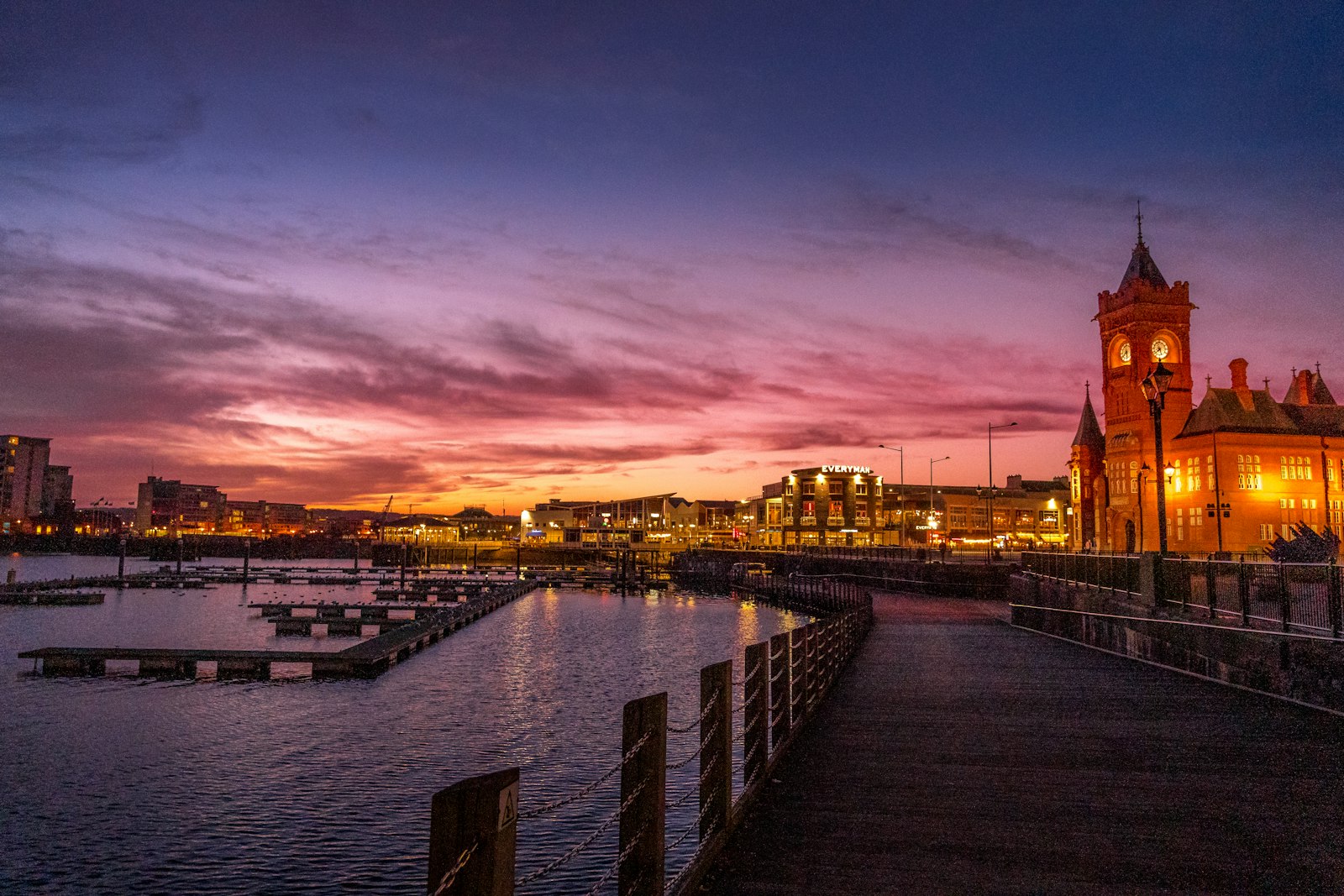
Area code 029 is not a number that any UK company can buy off the shelf. It identifies Cardiff and its immediate hinterland at a regulatory level, so operators release an 029 line only where the subscriber has a recognised geographic link to the area, typically a registered office, a branch address or a serviced office inside the Cardiff numbering area. The rule, set under Ofcom’s National Telephone Numbering Plan, exists so that an 029 number on a website continues to mean what UK customers expect it to mean. For an established Cardiff firm the rule is invisible, but for companies expanding into south Wales, restructuring after a merger or relocating a head office, it pays to know precisely which places sit inside the 029 area and which sit just outside.
This article maps the 029 coverage in detail, explains why Ofcom and UK operators tie the prefix to a real address, and walks through the steps that confirm whether your business qualifies. From there, applying for an 029 number for your Cardiff business becomes a predictable exercise rather than a gamble on which carrier accepts which paperwork.
Which towns does the 029 area code cover?
The 029 area covers the city of Cardiff together with the towns that historically connected through the same Cardiff exchange group, which is why it reaches into the Vale of Glamorgan and into the southern half of Caerphilly county borough. The principal centres inside the area:
- Cardiff city centre and Cardiff Bay — CF10, the central business district around Park Street, Callaghan Square and the Principality Stadium, plus the Bay with the Senedd and the Wales Millennium Centre, and by far the highest concentration of commercial premises on the code
- Roath and Cathays — CF24, the inner north-eastern suburbs around Roath Park and the university quarter, with the second-largest commercial base on the code
- Llandaff and Victoria Park — CF5, the cathedral district and the western inner suburbs along Cowbridge Road
- Culverhouse Cross and Caerau — CF5, the western retail and office corridor along the A4232 and A48 interchange
- Llanishen and Rhydypenau — CF14, north Cardiff, taking in the business premises along Ty Glas Avenue and the Llanishen and Thornhill residential belt
- Whitchurch, Rhiwbina and Birchgrove — CF14, the north-western suburbs along Manor Way, close to the M4 at Coryton
- Llanrumney and Rumney — CF3, east Cardiff, mixing residential estates with trade counters and light industry along Newport Road
- Llanedeyrn and Pontprennau — CF23, the north-eastern growth area either side of Eastern Avenue
- Penarth, Cosmeston and Lower Penarth — CF64 in the Vale of Glamorgan rather than Cardiff, on 029 with its pier, marina and professional-services base
- Dinas Powys and St Andrews Major — CF64, the commuter belt between Penarth and Barry, on 029 while Barry itself is not
- Sully and Swanbridge — CF64, the coastal villages on the Vale shoreline, still inside the Cardiff group
- Radyr, Morganstown and Taffs Well — CF15, the northern commuter corridor along the A470 with stations on the Valley Lines
- Pentyrch, Creigiau and Capel Llanilltern — CF15, the north-western rural fringe of the numbering area
- Caerphilly, Trecenydd, Bedwas, Llanbradach and Rudry — CF83 in Caerphilly county borough, on 029 rather than a valleys code, with Caerphilly Castle and a station on the Rhymney line
- Abertridwr and Senghenydd — CF83, the upper Aber valley, the northern limit of the 029 area
A business with a Companies House registered office, a branch address or a serviced office at any postcode inside this footprint satisfies the geographic-association rule and qualifies for an 029 number. CallFactory verifies the address against Companies House at the point of application.
Why the geographic rule exists
UK area codes were designed so that the leading digits of a phone number tell the caller, and the caller’s billing system, which part of the country the line sits in. An 029 says: this line belongs to Cardiff. An 01633 says: Newport. An 01446 says: Barry. That signalling job only works while the prefix stays anchored to a real address rather than a marketing preference. Ofcom’s National Telephone Numbering Plan formalises the anchor by tying each geographic block to a numbering area and asking operators to release numbers only where the subscriber has a meaningful link to that area.
For your business the rule has two consequences. The practical one comes first, because without a Cardiff or Caerphilly address on file an operator will refuse the application or unwind it later when the address check fails. The strategic consequence matters for longer. An 029 number holds its commercial value precisely because the rule stops every UK company from claiming a Welsh capital identity at will, and that scarcity is what turns the prefix into a trust signal on a website, an invoice or a public-sector tender.
What counts as a meaningful link is broader in the UK than in most continental European jurisdictions. A registered office on St Mary Street, a branch listed at Companies House in Caerphilly and a serviced office in Cardiff Bay all qualify. A residential PO box does not. A virtual mailbox with no real workplace behind it sits in a grey area, where most UK operators will still release the number but ask for supporting documentation. CallFactory verifies the address before activation so that the assignment stands up to a later audit.
Boundary cases around Cardiff
South Wales places its towns close together, and the valleys codes cut across county-borough lines, so several places that look as though they belong on 029 in fact sit elsewhere. The main cases:
- Newport, Castleton and Marshfield — east, area code 01633. Newport has always been a separate numbering area and was never folded into 029, and the villages between the two cities belong to the Newport exchange group rather than the Cardiff one
- Machen — north-east, also 01633, which makes it the sharpest boundary on the area, because neighbouring Bedwas is on 029
- Barry, Cowbridge and Llantwit Major — west, area code 01446. The largest Vale of Glamorgan town keeps its own code even though Sully and Dinas Powys, closer to Barry than to Cardiff, are on 029
- Pontypridd, Nelson and Ystrad Mynach — north, area code 01443. Nelson and Ystrad Mynach sit inside Caerphilly county borough yet take the Pontypridd code, while Caerphilly and Llanbradach take 029
- Bargoed and the upper Rhymney valley — north, also 01443
- Blackwood — north-east, area code 01495, on the Pontypool side of the valleys
- Bridgend, Porthcawl and Maesteg — west, area code 01656
- Merthyr Tydfil — north, area code 01685
- Chepstow — east, area code 01291
- Abergavenny — north-east, area code 01873
These boundary cases matter for two reasons. First, they stop businesses in commuter towns from submitting an 029 application that an operator will later refuse. Second, they map cleanly onto a multi-site structure, because a Newport head office can keep its 01633 line while a Cardiff branch carries a separate 029, with both routed through the same CallFactory account so that callers and staff treat them as one phone system.
How the 029 region grew historically
Cardiff entered the national STD system with the code 0222, which came from the mnemonic CA2 for CArdiff on a rotary dial. Before the mid-1970s the territory now on 029 was split in two, because Cardiff sat on 0222 while the outer exchanges belonged to a Glamorgan group on 0447, with separate codes for Caerphilly, Llanbradach, Dinas Powys, Radyr, Pentyrch, Taffs Well, Sully, Senghenydd and Bedwas. Those outer exchanges were absorbed into the Cardiff charge group during that decade, which is the consolidation that actually created today’s footprint.
PhONEday, on 16 April 1995, prefixed a “1” to UK geographic codes and turned 0222 into 01222, freeing the 02 to 09 ranges for later use. The Big Number Change of 22 April 2000 then replaced 01222 with 029, and six-digit local numbers became eight-digit numbers beginning 20, so a Cardiff line printed as (01222) 345678 became (029) 2034 5678. The same reform moved London to 020, Northern Ireland to 028, Coventry to 024 and Portsmouth and Southampton to 023. Caerphilly moved across with Cardiff at that point rather than being merged in, since it had already been inside the Cardiff charge group for a quarter of a century, and it was assigned the 2085, 2086 and 2088 blocks.
The structure this produced is the single most misread thing about the code. 029 is a two-digit area code followed by an eight-digit local number, written as (029) xxxx xxxx. It is not a five-digit “02920” code with six digits after it, and treating it that way breaks as soon as a number falls outside the 20 level. Ofcom has released 029 21xx xxxx and 029 22xx xxxx for the same area alongside the original 029 20xx xxxx, so the usable space now spans local numbers beginning 20, 21 and 22, and only the 20 level maps onto the sixteen historical BT exchanges. Within that level the geography is finer than most guides admit: 2081 serves Taffs Well, 2083 Abertridwr and Senghenydd, 2084 Radyr, 2089 Pentyrch and Creigiau, and 2085 with 2086 and 2088 serve Caerphilly. On scale, Cardiff’s council area recorded 362,310 residents at the 2021 census, and adding Penarth, Caerphilly town and the Aber valley communities puts the numbering area in the region of 450,000 people, which makes it comfortably the largest business numbering area in Wales.
How to check if your business qualifies for an 029 number
Verification before you apply takes about five minutes and removes most of the risk that an application is refused later:
- Look up your Companies House record. Open the Companies House register, find your company entry and confirm the registered office address. If that address sits inside the 029 area, meaning the city of Cardiff, the CF14, CF23, CF24, CF3, CF5 and CF10 suburbs, the CF15 northern fringe, the CF64 belt through Penarth, Dinas Powys and Sully, or CF83 through Caerphilly, Bedwas, Llanbradach and the Aber valley, the rule is satisfied. Where only a branch address falls inside the area, note the branch reference so that the application can be tied to the branch rather than the head office.
- Confirm the address is current. A registered office that was never updated after a move is the most common reason for a refusal. File a change of address at Companies House before submitting if the listing lags real life. Sole traders without a Companies House entry should keep an HMRC self-assessment confirmation showing a Cardiff trading address.
- Submit the application. CallFactory checks the address against Companies House at the point of order, holds the number while the verification clears, usually the same morning, and activates the line within one working day. Where the registered office sits outside the 029 area but a branch sits inside, send both addresses with the order so that the line is tied to the qualifying entry from the start.
Edge cases come up frequently. A Bristol head office with a serviced-office branch in Cardiff Bay satisfies the rule, because the branch address is what the operator records. A move from Roath to Llanishen does not require a new number, since porting keeps the existing 029 line in place. A multi-site business with locations in both Cardiff and Caerphilly can put each branch on its own 029 sequence and route them all through one CallFactory call flow, so that a single team handles the whole estate without callers noticing.
If your business is outside the 029 area
A business that does not qualify for an 029 line still has good options for reaching Cardiff customers. The fit depends on whether you want a regional identity, a national presence or a freephone hotline.
- A neighbouring local code — 01633 for Newport, Machen and Marshfield, 01446 for Barry, Cowbridge and Llantwit Major, 01443 for Pontypridd, Nelson and Bargoed, 01656 for Bridgend, 01495 for Blackwood and 01685 for Merthyr Tydfil. Useful where a company genuinely belongs to a neighbouring district and wants a recognisable local identity rather than a Cardiff claim
- A national 0333 number — a 0333 number charged at standard geographic call rates wherever the caller dials from. Suits operators with a UK-wide remit who want one published line for every region
- A freephone 0800 line — an 0800 freephone number where the caller pays nothing and the cost sits with the business. The classic fit for sales hotlines, customer-service campaigns and inbound marketing
- A national overview — the UK phone-numbers overview lays out every range Ofcom administers, with guidance on which one suits each commercial profile
- A future Cardiff branch — opening even a small serviced-office branch inside the 029 area satisfies the geographic rule and allows you to add an 029 line later. Plenty of out-of-area businesses follow that route deliberately, because it keeps the existing regional code while adding a Cardiff signal once the branch is in place
The right alternative depends on where you want the brand to sit. A regional code reads as authentically local, a 0333 reads as nationally credible, and an 0800 prioritises caller convenience over geographic identity. The full feature set, monthly cost and contract terms across all of them are listed on the pricing page.
Get started
If your business satisfies the geographic-association rule and you want an 029 line live this week, apply through the Cardiff 029 number page. CallFactory verifies the Companies House address, holds the number for you and activates the line within one working day, complete with call forwarding to a mobile or landline, a text-to-speech welcome message in any language and call recording for compliance and training.
If your registered office sits just outside the 029 area but a branch sits inside, submit both addresses with the order and we will route the application through the qualifying entry. If neither address falls inside the area, a 0333 national number covers most of the same commercial ground without the geographic rule, and it pairs neatly with an 029 line once you do open a Cardiff branch.


