
 Austria
 Belgium
 France
 Germany
 Italy
Italy Netherlands
 Poland
 Spain
Spain Sweden
 United States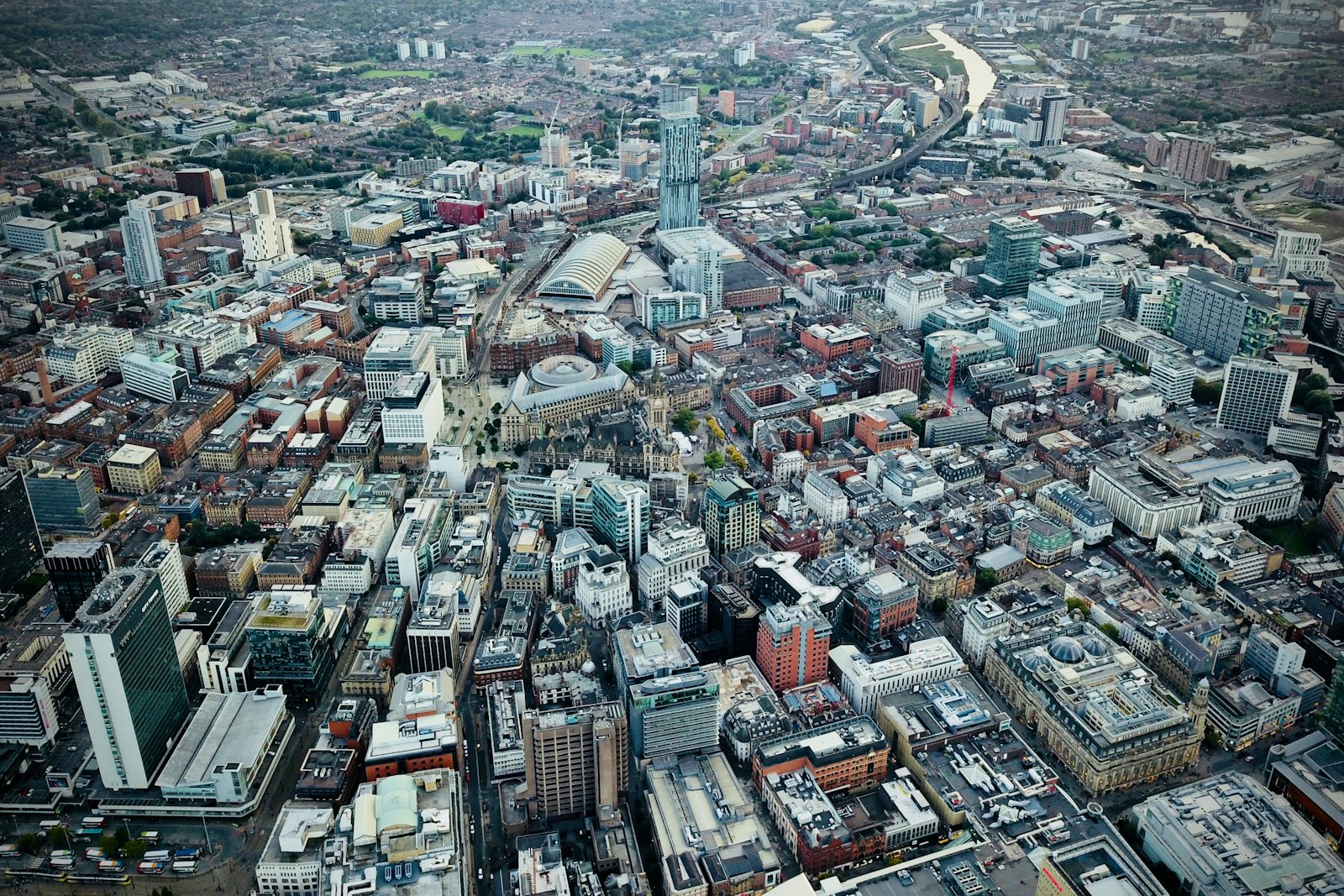
Area code 0161 identifies the Greater Manchester conurbation, and callers from Salford to Stockport read a 0161 number on a website, an invoice or a Google Business Profile as a Manchester line. You do not need an office in Manchester to use that signal, because Ofcom’s National Telephone Numbering Plan lets a business outside the area take a 0161 number as long as it asked for that code and callers pay the normal rate for it. For companies expanding into the region, restructuring after a merger or moving a head office, it pays to know precisely which towns sit inside the 0161 area and which sit just outside.
This article maps the 0161 coverage in detail, explains what Ofcom’s numbering plan says about who can hold the prefix, and walks through what you need to order a number. From there, applying for a 0161 number for your Manchester business becomes a predictable exercise.
Which towns does the 0161 area code cover?
The 0161 area covers the historic Manchester telephone district — the city of Manchester itself together with the neighbouring boroughs that connected through the same exchange network. The principal centres inside the area:
- Manchester city — Spinningfields, Deansgate, the Northern Quarter, Ancoats, the universities cluster around Oxford Road and the rebuilt Piccadilly Gardens core
- Salford and the Quays — Salford city, MediaCityUK with the BBC and ITV campuses, Ordsall and the Manchester Ship Canal warehousing belt
- Trafford — Old Trafford, Stretford, Sale, Altrincham and the Trafford Park industrial estate, one of the largest contiguous industrial areas in Western Europe
- Stockport and the south — Stockport town centre, Cheadle, Bramhall, Hazel Grove and the Heatons, with a mix of professional services, retail and the former Stockport Pyramids office cluster
- Tameside — Ashton-under-Lyne, Hyde, Stalybridge, Denton and Droylsden along the M67 corridor
- Bury and Prestwich — Bury town centre, Radcliffe, Whitefield and the Prestwich and Heaton Park residential and retail belt
- Oldham core — Oldham town centre, Chadderton, Failsworth and Royton, picking up the southern half of the Oldham metropolitan borough
- Wythenshawe and the airport corridor — Wythenshawe town centre, Manchester Airport, the surrounding business and hotel estates and the Roundthorn industrial park
- Eccles and Worsley — north-west Salford reaching into the M60 ring, with logistics and light manufacturing around the Ship Canal
Callers in every one of these places recognise a 0161 number as a Manchester line and pay the normal geographic rate to reach it. Your own office does not have to sit inside this footprint, because the number registers on your business address wherever that is, in the UK or abroad.
Why the geographic rule exists
UK area codes were designed so that the leading digits of a phone number tell the caller, and the caller’s billing system, which part of the country the line sits in. A 0161 says: this line belongs to Greater Manchester. A 020 says: London. A 0121 says: Birmingham. The numbering plan does not, however, require the business behind the number to be in Greater Manchester. Clause B3.1.1 of Ofcom’s National Telephone Numbering Plan, headed “Out of Area use of Geographic Numbers”, allows a geographic number to be assigned to a subscriber outside the area, provided the subscriber asked for a number with that area code and calls to it are charged in line with calls to any other number with that code.
In practice a 0161 number is open to your business whether your office is in Manchester, in another UK city or outside the UK. You ask for the code by choosing a 0161 number, and callers pay the normal rate for a Manchester number, so both conditions are met from the start. The number registers on your own business address wherever that is, and CallFactory checks your business details before the line goes live, in line with Ofcom’s guidance that providers confirm a customer is a genuine business.
That makes the UK more open than many continental European markets, where a local geographic number often requires an address inside the numbering zone. A Manchester firm, a Leeds company that wins customers in Greater Manchester and an overseas business entering the British market can all publish a 0161 number, and in each case Manchester customers call a local line while the calls ring through to the team wherever it sits.
Boundary cases around Manchester
Greater Manchester is one of the most fragmented numbering areas in England, because the modern county boundary was set in 1974 while the underlying telephone districts were drawn decades earlier. As a result, several boroughs that belong politically to Greater Manchester sit on a different area code. The main cases:
- Bolton, Farnworth and Westhoughton — west, area code 01204. Bolton borough kept its own code at every reform, even though it borders Salford directly
- Wigan, Leigh and Atherton — west, area code 01942. Wigan has its own code that covers the borough, with only a small fringe touching 0161
- Rochdale, Heywood and Middleton fringe — north, area code 01706. Rochdale town and most of the borough use 01706, with limited 0161 cross-over in places like Middleton on the Oldham side
- Macclesfield, Wilmslow and Knutsford — south, area code 01625. The northern Cheshire commuter belt around the Manchester Airport approach uses 01625 even though the labour market overlaps heavily with south Manchester
- Warrington, Lymm and Risley — south-west, area code 01925. Warrington sits between Manchester and Liverpool and runs its own code, which catches operators near the M6 motorway hub
- Glossop and the western High Peak — east, area code 01457 (Derbyshire). Just over the M67 from Tameside, but on a separate Derbyshire code
- Stalybridge edge into the Pennines — east. Stalybridge is 0161, but the moors above it switch to 01457 once you cross the county boundary
These boundary cases matter for two reasons. First, callers judge a number by its code rather than by the map, so a business whose customers sit in Bolton or Wigan reaches them better with 01204 or 01942 than with 0161. Second, they map cleanly onto a multi-site structure: a Bolton head office can keep its 01204 line while a Manchester branch carries a separate 0161, with both routed through the same CallFactory account so that callers and staff treat them as one phone system.
How the 0161 area grew historically
Manchester’s numbering history runs along similar lines to Birmingham’s, because both cities ran out of subscriber capacity earlier than the rest of the country and were among the first English areas off the Director system. The original Manchester code was 061 from the late 1960s, after the city moved away from the older letter-prefix codes. PhONEday in April 1995 added a leading “1” to every UK area code, taking 061 to 0161 and giving the area its current shape. Unlike London, Manchester did not need a subsequent split, because the 0161 range had enough subscriber capacity to absorb the rising demand of the late 1990s and 2000s without requiring a second code.
The 0161 numbering area was drawn around the older Manchester telephone district rather than the modern Greater Manchester metropolitan county boundary, which is why neighbouring boroughs such as Bolton, Wigan and Rochdale kept their own codes through every reform. That mismatch between the political county and the telecoms area produces the most common confusion for businesses moving into the conurbation, because Greater Manchester maps and Greater Manchester area codes do not overlap one-to-one. The 0161 numbering area covers roughly 2.5 million people across the contiguous Manchester, Salford, Trafford, Stockport, Tameside, Bury and Oldham core, which makes it the third-largest single English area code by population after 020 and 0121. New numbering blocks continue to be released as needed, and the introduction of Number Portability in 1997 means a Manchester business that moves provider keeps its existing 0161 line without losing its identity.
How to apply for a 0161 number
Ordering a 0161 number takes a few minutes, and none of the steps depends on where your office is:
- Choose your number. Pick an ordinary 0161 number or a memorable digit pattern. No Manchester office, branch or serviced address is needed for either.
- Give your business details. Enter your company name and business address. The number registers on that address, which can be anywhere in the UK or abroad, so a registered office in Leeds, a head office in London and a company address outside the UK are all accepted.
- Submit the application. CallFactory checks your business details at the point of order, holds the number while the verification clears (typically the same morning) and activates the line within one working day.
Edge cases come up frequently. A London company that wins customers in Manchester can publish a 0161 number without opening an office there, and keep the same number if it later takes space in Spinningfields. A move from Salford Quays to Stockport does not require a new number — porting keeps the existing 0161 in place. A multi-site business with several Manchester locations can put each branch on its own 0161 sequence and route them all through one CallFactory call flow, which means a single team handles the whole estate without callers noticing.
If your business is outside the 0161 area
A business outside the 0161 area can still take a 0161 number, because it registers on your own business address wherever that is. When your callers are not in Manchester, another number can fit better. The fit depends on whether you want a regional identity, a national presence or a freephone hotline.
- A neighbouring local code — 01204 for Bolton, 01942 for Wigan, 01706 for Rochdale, 01925 for Warrington, 01625 for Macclesfield. Useful for businesses that genuinely belong to a neighbouring borough and want a recognisable local identity rather than a Manchester claim
- A national 0333 number — 0333 number charged at standard geographic call rates regardless of where the caller dials from. Suits operators with a UK-wide remit who want one published line for every region
- A freephone 0800 line — 0800 freephone number where the caller pays nothing and the cost sits with the business. The classic fit for sales hotlines, customer-service campaigns and inbound marketing
- A national overview — the UK phone-numbers overview lays out every range Ofcom administers, with guidance on which one suits each commercial profile
The right alternative depends on where you want the brand to sit. A regional code reads as authentically local; a 0333 reads as nationally credible; a 0800 prioritises caller convenience over geographic identity. The full feature set, monthly cost and contract terms across all of them are listed on the pricing page.
Get started
If you want a 0161 line live this week, apply through the Manchester 0161 number page. CallFactory checks your business details, holds the number for you and activates the line within one working day, complete with call forwarding to a mobile or landline, a text-to-speech welcome message in any language and call recording for compliance and training.
The same order works for a Manchester firm, for a company elsewhere in the UK that serves customers in Greater Manchester and for a business outside the UK, because the number registers on your own business address wherever it is. If your customers are spread across the whole country, a 0333 national number covers them with one line, and it pairs neatly with a 0161 number for the Manchester market.