

 Austria
 Belgium
 France
 Germany
 Italy
Italy Netherlands
 Poland
 Spain
Spain Sweden
 United States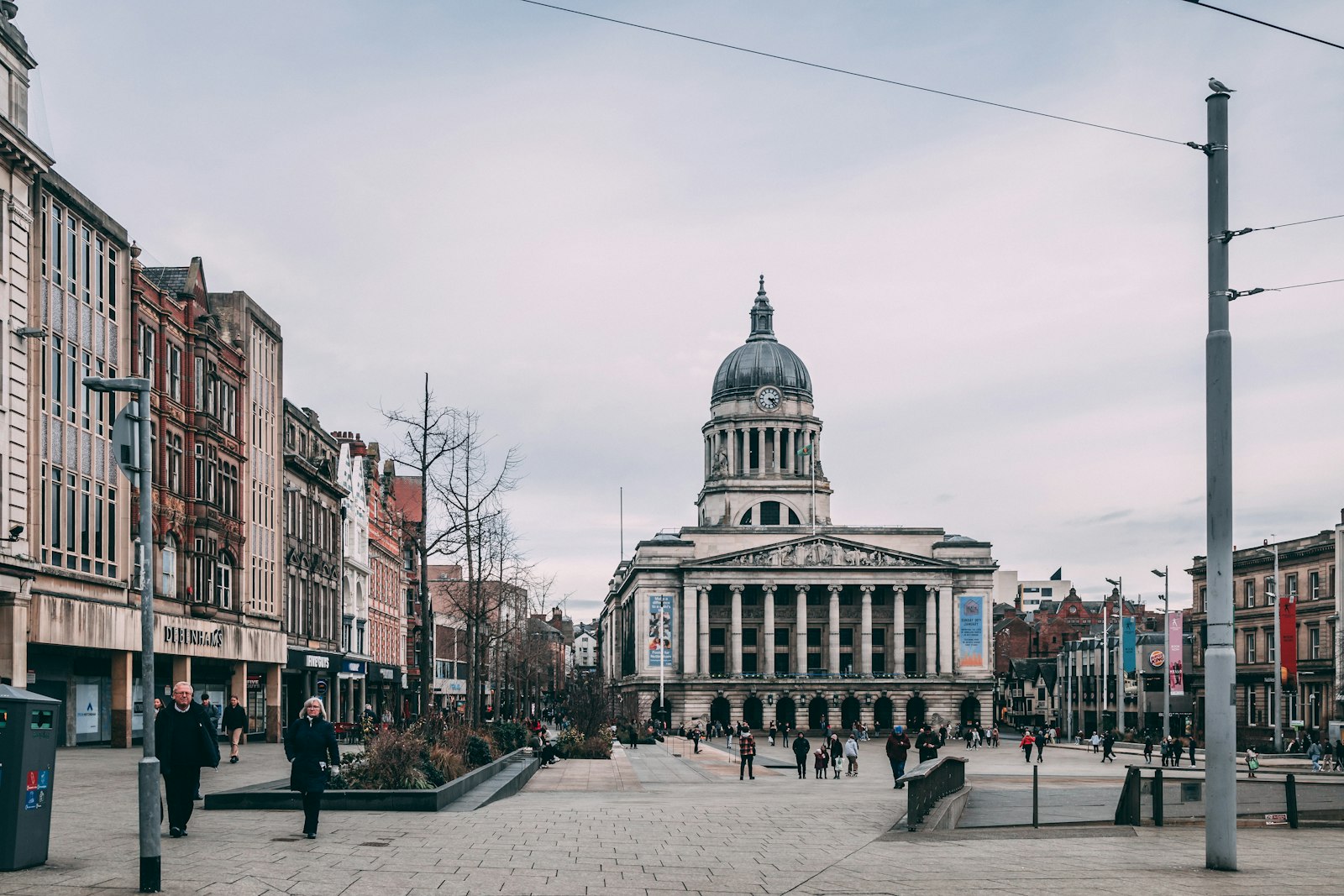
Area code 0115 is not a number that any UK company can buy off the shelf. It identifies Nottingham at a regulatory level, so operators release a 0115 line only where the subscriber has a recognised geographic link to the area, typically a registered office, a branch address or a serviced office inside the Nottingham numbering area. The rule, set under Ofcom’s National Telephone Numbering Plan, exists so that a 0115 number on a website continues to mean what UK customers expect it to mean. For an established Nottingham firm the rule is invisible, but for companies expanding into the East Midlands, restructuring after a merger or relocating a head office, it pays to know precisely which places sit inside the 0115 area and which sit just outside.
This article maps the 0115 coverage in detail, explains why Ofcom and UK operators tie the prefix to a real address, and walks through the steps that confirm whether your business qualifies. From there, applying for a 0115 number for your Nottingham business becomes a predictable exercise rather than a gamble on which carrier accepts which paperwork.
Which towns does the 0115 area code cover?
The 0115 area covers the city of Nottingham together with the surrounding boroughs that historically connected through the same Nottingham exchanges, which means it crosses the county line into Derbyshire. The principal centres inside the area:
- Nottingham city centre — NG1, the central business district around Old Market Square, the Lace Market and Maid Marian Way, served by the largest exchange on the code and reached from Nottingham station on the Midland Main Line
- Bulwell and Basford — NG6 and NG5, the northern and inner north-western districts, combining industrial estates, trade counters and a large small-business base along the Hucknall Road and Nottingham Canal corridors
- Sherwood, Mapperley and Wollaton — NG5 and NG8, the established inner suburbs with a professional and clinical belt running out along Mansfield Road and Derby Road
- Beeston — NG9 in Broxtowe, home to the Boots support office on the Thane Road site and adjacent to the University of Nottingham, with tram links into the city
- West Bridgford and Edwalton — NG2, the administrative centre of Rushcliffe borough with roughly 36,000 residents at the 2021 census, and a dense professional-services base along Central Avenue
- Arnold and Carlton — NG5 and NG4, the two main towns of Gedling borough, each with a substantial high-street and light-industrial base
- Stapleford and Trowell — NG9, the western fringe towards the M1, close to the Toton Lane tram park-and-ride and the A52 corridor
- Long Eaton and Sandiacre — NG10 in Derbyshire rather than Nottinghamshire, yet firmly on 0115, sitting between the M1 at Junction 25 and the Erewash, with a manufacturing history in lace and upholstery
- Ilkeston and West Hallam — DE7 in Derbyshire, the largest Derbyshire town on the code, with its railway station reopened in 2017 on the Midland Main Line
- Hucknall and Kimberley — NG15 and NG16, the northern towns at the tram terminus and the former brewery town to the north-west, both on the Nottingham side of the boundary with the 01773 area
- Ruddington, Clifton and Gotham — NG11, the southern belt including the large Clifton estate at the southern tram terminus with its A453 park-and-ride
- Keyworth, Cotgrave and Tollerton — NG12, the Rushcliffe villages, with the British Geological Survey headquartered at Keyworth
- Radcliffe on Trent, Burton Joyce and Gunthorpe — NG12 and NG14, the Trent-side villages east of the city on their own small exchanges
A business with a Companies House registered office, a branch address or a serviced office at any postcode inside this footprint satisfies the geographic-association rule and qualifies for a 0115 number. CallFactory verifies the address against Companies House at the point of application.
Why the geographic rule exists
UK area codes were designed so that the leading digits of a phone number tell the caller, and the caller’s billing system, which part of the country the line sits in. A 0115 says: this line belongs to Nottingham. A 01332 says: Derby. A 0116 says: Leicester. That signalling job only works while the prefix stays anchored to a real address rather than a marketing preference. Ofcom’s National Telephone Numbering Plan formalises the anchor by tying each geographic block to a numbering area and asking operators to release numbers only where the subscriber has a meaningful link to that area.
For your business the rule has two consequences. The practical one comes first, because without a Nottingham address on file an operator will refuse the application or unwind it later when the address check fails. The strategic consequence matters for longer. A 0115 number holds its commercial value precisely because the rule stops every UK company from claiming a Nottingham identity at will, and that scarcity is what turns the prefix into a trust signal on a website, an invoice or a tender submission.
What counts as a meaningful link is broader in the UK than in most continental European jurisdictions. A registered office in the Lace Market, a branch listed at Companies House in Beeston and a serviced office on the Nottingham Science Park all qualify. A residential PO box does not. A virtual mailbox with no real workplace behind it sits in a grey area, where most UK operators will still release the number but ask for supporting documentation. CallFactory verifies the address before activation so that the assignment stands up to a later audit.
Boundary cases around Nottingham
The East Midlands numbering map cuts across both county and borough lines, so several towns that look as though they belong on 0115 in fact sit on a different code. The main cases:
- Eastwood — north-west, area code 01773. The Nottinghamshire town sits on the Ripley code even though Kimberley and Awsworth a short distance south are on 0115, which makes this the tightest boundary on the whole area
- Heanor, Ripley and Langley Mill — north-west, also 01773, on the Derbyshire side of the Erewash valley
- Alfreton and Somercotes — north-west, again 01773
- Bingham and Whatton — east, area code 01949. Bingham looks like a Rushcliffe extension of the 0115 belt but keeps its own code, unlike Radcliffe on Trent a few miles closer to the city
- Derby, Spondon and Chaddesden — west, area code 01332. Derby anchors its own numbering area, even though Long Eaton and Sandiacre between the two cities are on 0115
- Mansfield and Sutton-in-Ashfield — north, area code 01623
- Newark-on-Trent — east, area code 01636
- Loughborough — south, area code 01509, on the Leicestershire side of the Soar valley
- Melton Mowbray — south-east, area code 01664
- Grantham — east, area code 01476
- Worksop — north, area code 01909
- Ashbourne — west, area code 01335
These boundary cases matter for two reasons. First, they stop businesses in commuter towns from submitting a 0115 application that an operator will later refuse. Second, they map cleanly onto a multi-site structure, because a Derby head office can keep its 01332 line while a Nottingham branch carries a separate 0115, with both routed through the same CallFactory account so that callers and staff treat them as one phone system.
How the 0115 region grew historically
Nottingham entered the national STD system with the code 0602, which came from the mnemonic NO2 for NOttingham on a rotary dial and served the city with six-digit local numbers through the analogue era. PhONEday, on Sunday 16 April 1995, reshaped the UK numbering map by inserting a “1” after the leading zero of most codes, while five English cities received entirely new four-digit codes instead. Nottingham became 0115 in that reform, alongside Leeds 0113, Sheffield 0114, Leicester 0116 and Bristol 0117, and a leading “9” was added to every existing local number so that (0602) 234567 became (0115) 923 4567. An eight-month parallel-running period ran from 1 August 1994, backed by a nationwide campaign, and Reading followed with 0118 a year later.
Nottingham has never needed a second area code or a split. Capacity was added inside 0115 instead, by opening new local-number levels: numbers beginning 8 from 1997, 7 from 2006, a limited release beginning 2 from 2009 and 6 from 2015, on top of the original 9xx stock carried over from 0602. The 0 and 1 levels are also in service, while 3, 4 and 5 have never been used as the first local digit, so the code retains headroom and has never appeared on a shortage watchlist. Around two dozen BT exchanges carry 0115, from the main city exchange with roughly 93,000 numbers down to village units of a thousand, and several hundred further blocks sit with other licensed providers, which is why a 0115 number does not by itself imply a physical Nottingham line.
Scale is worth stating carefully, because the city and the built-up area are not the same thing. Nottingham’s city council area recorded 323,700 residents at the 2021 census, while the wider Nottingham built-up area recorded 719,400 across Nottinghamshire and Derbyshire, which matches the way 0115 crosses the county line. As with the other 011x codes, the number should be written as (0115) xxx xxxx rather than as “01159”, since the newer levels beginning 8, 7, 2 and 6 break any assumption that the local part always starts with a 9.
How to check if your business qualifies for a 0115 number
Verification before you apply takes about five minutes and removes most of the risk that an application is refused later:
- Look up your Companies House record. Open the Companies House register, find your company entry and confirm the registered office address. If that address sits inside the 0115 area, meaning the city of Nottingham, the inner suburbs from NG1 through NG8, or the outer ring through Beeston, Stapleford, Arnold, Carlton, West Bridgford, Hucknall, Kimberley, Ruddington, Keyworth, Long Eaton, Sandiacre and Ilkeston, the rule is satisfied. Where only a branch address falls inside the area, note the branch reference so that the application can be tied to the branch rather than the head office.
- Confirm the address is current. A registered office that was never updated after a move is the most common reason for a refusal. File a change of address at Companies House before submitting if the listing lags real life. Sole traders without a Companies House entry should keep an HMRC self-assessment confirmation showing a Nottingham trading address.
- Submit the application. CallFactory checks the address against Companies House at the point of order, holds the number while the verification clears, usually the same morning, and activates the line within one working day. Where the registered office sits outside the 0115 area but a branch sits inside, send both addresses with the order so that the line is tied to the qualifying entry from the start.
Edge cases come up frequently. A Derby head office with a serviced-office branch in the Lace Market satisfies the rule, because the branch address is what the operator records. A move from Beeston to West Bridgford does not require a new number, since porting keeps the existing 0115 in place. A multi-site business with several Nottingham locations can put each branch on its own 0115 sequence and route them all through one CallFactory call flow, so that a single team handles the whole estate without callers noticing.
If your business is outside the 0115 area
A business that does not qualify for a 0115 line still has good options for reaching Nottingham customers. The fit depends on whether you want a regional identity, a national presence or a freephone hotline.
- A neighbouring local code — 01332 for Derby, 01773 for Eastwood, Ripley and Heanor, 01623 for Mansfield, 01636 for Newark, 01509 for Loughborough, 01949 for Bingham and 01476 for Grantham. Useful where a company genuinely belongs to a neighbouring district and wants a recognisable local identity rather than a Nottingham claim
- A national 0333 number — a 0333 number charged at standard geographic call rates wherever the caller dials from. Suits operators with a UK-wide remit who want one published line for every region
- A freephone 0800 line — an 0800 freephone number where the caller pays nothing and the cost sits with the business. The classic fit for sales hotlines, customer-service campaigns and inbound marketing
- A national overview — the UK phone-numbers overview lays out every range Ofcom administers, with guidance on which one suits each commercial profile
- A future Nottingham branch — opening even a small serviced-office branch inside the 0115 area satisfies the geographic rule and allows you to add a 0115 line later. Plenty of out-of-area businesses follow that route deliberately, because it keeps the existing regional code while adding a Nottingham signal once the branch is in place
The right alternative depends on where you want the brand to sit. A regional code reads as authentically local, a 0333 reads as nationally credible, and an 0800 prioritises caller convenience over geographic identity. The full feature set, monthly cost and contract terms across all of them are listed on the pricing page.
Get started
If your business satisfies the geographic-association rule and you want a 0115 line live this week, apply through the Nottingham 0115 number page. CallFactory verifies the Companies House address, holds the number for you and activates the line within one working day, complete with call forwarding to a mobile or landline, a text-to-speech welcome message in any language and call recording for compliance and training.
If your registered office sits just outside the 0115 area but a branch sits inside, submit both addresses with the order and we will route the application through the qualifying entry. If neither address falls inside the area, a 0333 national number covers most of the same commercial ground without the geographic rule, and it pairs neatly with a 0115 line once you do open a Nottingham branch.


